MLB Betting Markets Explained for UK Punters
 Available in US

Table of Contents
- Why this is a market guide and not a strategy guide
- The four families of MLB betting markets
- Match winner and the American moneyline
- Anatomy of the MLB run line
- Totals: betting the runs line
- Derivative markets: innings, halves, race-to bets
- Player props: hitters, pitchers and the new K market
- Team totals and the alt grid
- Exotics: parlays, novelties, in-game specials
- How UK bookmakers cover MLB markets in practice
- What I do before placing any MLB bet
Why this is a market guide and not a strategy guide
Eleven years into modelling MLB pitcher matchups for a living, I still see UK punters arrive at a sportsbook treating MLB like football with bases — picking a “winner”, chucking on an accumulator, and wondering why the variance feels brutal. The variance is fine. The market choice is wrong. This article is a map of what you can actually bet on, not a manual on how to beat the closing line.
Treat the two as separate skills. Market selection is the question of which game state you want exposure to: the result after nine innings, the result after five, the total runs, a single hitter’s exit velocity. Strategy is the question of when each of those is mispriced. I’ll handle the first here.
There is a structural reason MLB carries more market depth than most other sports a British punter touches. The regular season runs to 2,430 matches, 162 per club, played across roughly six months — the largest fixture list of any major North American league. UK bookmakers post lines on every single one, with a typical book offering thirty to fifty markets per game once you include alternate lines, derivatives and live in-play. That is more weekly tradable surface than the entire Premier League fixture round.
What that volume produces is fragmentation. The same game is sliced into a dozen tradable questions, each priced by a different model and held to a different margin. Once you can name the families, you can tell within ten seconds whether a market is one you understand, one you should learn, or one to ignore. The rest of the article is a walk through each family in the order a UK book usually displays them — and a flag, every time the gap matters, for British labels that differ from the American ones.
The four families of MLB betting markets
The cleanest way I’ve found to teach the market grid is by what the bet resolves against. Forget the bookmaker’s tab labels — those vary by site. Group every MLB market into four buckets and the rest of your evening gets easier.
Bucket one is game outcome markets. These resolve against the final scoreline after the full nine innings, or however many it takes if scores are tied. Moneyline, run line and totals all sit here. They’re the spine of the offering and the only markets you’ll find at literally every UKGC-licensed book that prices MLB.
Bucket two is derivative markets. Same game, but resolving against a slice of it: first inning, first three innings, first five innings, race-to-three-runs, half-game winner. The bookmaker takes the game outcome and carves it into smaller settlement windows. The math is identical to bucket one; the variance profile is wildly different. F5 deliberately strips out the bullpen, which is the second-largest source of variance in a baseball game.
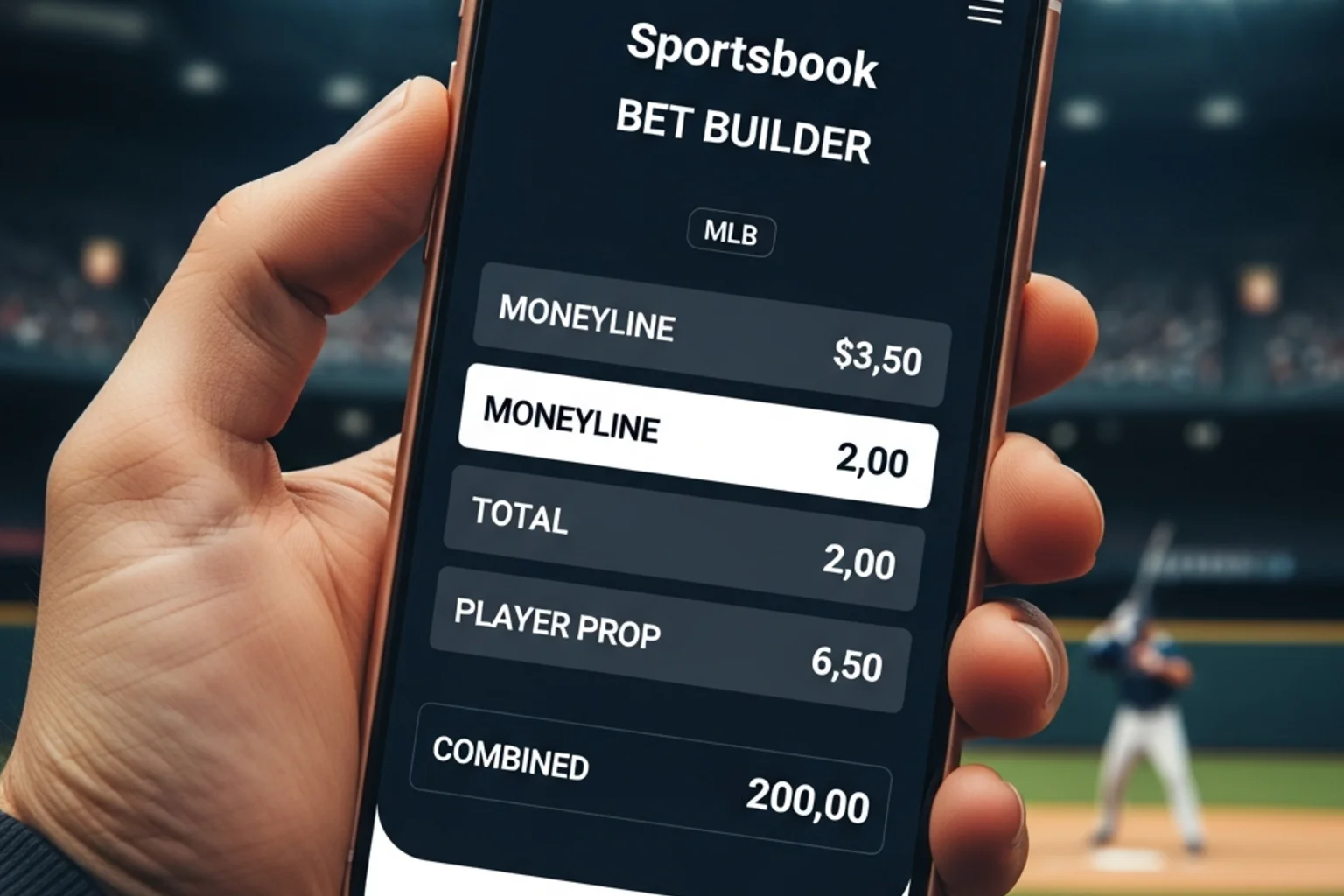
Bucket three is player props. These resolve against an individual player’s stat line rather than the team result. Hitter props (home runs, hits, total bases, RBIs) and pitcher props (strikeouts, earned runs, outs recorded) dominate. A subset called Bet Builder or Same Game Parlay lets you stack several props from one match into a correlated multiple — UK bookmakers introduced these aggressively post-2022 and they now drive a large slice of MLB handle.
Bucket four is futures and event markets. These resolve against an outcome weeks or months away: World Series winner, division winner, season win totals, MVP, Cy Young, regular-season home-run leader. The London Series and Tokyo Series outright winners technically sit here too.
Inside those four buckets is roughly 95% of every MLB market I’ve ever seen offered to a UK retail account. The remaining 5% is novelty — manager-of-the-year, jersey number of the next home-run hitter — and those are not where you build a sustainable position. Knowing which bucket you’re in tells you what variance to expect, what data to bring, and whether the price you’re looking at is even comparable to the price next door.
Match winner and the American moneyline
My first ever logged MLB bet was a £5 stake on the Cubs as a +160 underdog at a friend’s Vegas sportsbook. They lost, and on the way back to the hotel he kept asking why a “winner bet” in baseball pays better than the same bet in football. The honest answer is that baseball produces upsets at a rate no other major North American sport touches — and the moneyline is the market that prices that fact directly.
A moneyline is a straight bet on which team wins the match. No handicap, no margin. In the UK, half the operators have rebadged it as “match winner” or “to win match” because that language sells better to a British audience that grew up on three-way football markets. Functionally it’s the same product. The structural difference between MLB and football here is that baseball has no draw — extra innings keep going until somebody breaks the tie, so the market is a binary.
Heavy favourites in MLB are rarely shorter than 1.40 decimal (-250 American, 2/5 fractional) because so many one-run games swing on a single late at-bat. Heavy underdogs paying +200 or longer occur multiple times a week. The example everyone in the trade references is the Blue Jays opening 2025 at 66/1 to win the World Series at BetMGM — they then went on to play a seven-game final, with Game 3 stretching to 18 innings. That price was available all spring on UK exchanges too.
What you’re actually betting when you take a moneyline is implied probability. A decimal price of 2.00 says the bookmaker thinks the outcome happens 50% of the time, minus their margin. The underdog at +200 American (3.00 decimal) implies a 33.3% chance. The reason MLB underdogs cover so often relative to other sports is sample-size related: even the best regular-season MLB clubs lose roughly 60 games a year, and the worst still win 60-odd. The talent gap on any given day is narrow, the starter matters more than the franchise, and pitching matchups can briefly invert the standings.
One quirk worth flagging. Some UK bookmakers offer a three-way moneyline for MLB where the third leg is “tie after nine innings” — the bet settles before extras. The price on the favourite shortens dramatically because the bookmaker has stripped out the part of the match where weaker teams catch up. It’s a different market wearing a similar name. If you’re shopping for value, never compare a two-way ML price to a three-way ML price; the implied probabilities aren’t on the same scale.
Anatomy of the MLB run line
The run line is where most British punters get their first real “wait, that’s clever” moment with MLB betting. It looks like an Asian handicap from football, and the underlying logic is the same, but the convention is rigid in a way football handicaps never are. Baseball gives you exactly one handicap option: 1.5 runs. That’s it. Everywhere on the planet.
Mechanically, the run line is a fixed ±1.5 handicap applied to the full nine-inning result. The favourite is laying 1.5 runs, meaning they need to win by two runs or more for your bet to land. The underdog is receiving 1.5 runs, meaning you collect if they win outright or lose by exactly one run. Because every MLB game decided in regulation is decided by at least one run, the +1.5 side cashes whenever the team doesn’t blow out — which, on a six-month sample, is roughly 71% of games.
The price is what moves, not the handicap. A heavy favourite at -250 on the moneyline might be priced at +130 to win by two or more on the run line. The same underdog at +200 on the moneyline might shorten to -150 on the +1.5 run line. The bookmaker is rebalancing the margin via odds rather than via the handicap line itself. That stability is what makes the run line easy to model: every UK book offers the same ±1.5 number, so line shopping is purely a price comparison.
For a worked example, take the 2025 World Series matchup. The Dodgers opened the series as a +240 favourite at BetMGM — implying a roughly 67% chance of winning the series. On a single-game basis, a Dodgers-led match might price the moneyline at 1.62 decimal and the -1.5 run line at 2.30 decimal. A £20 stake on the run line returns £46 if Dodgers win by two-plus; the same stake on the moneyline returns £32.40. You’re trading a 71% historical strike rate for a 50%-ish one — but the payout grows by roughly 40%.
The trap most new punters fall into is treating the underdog +1.5 like free money. It cashes more often, sure. But the bookmaker prices it accordingly, and the implied margin baked into a -150 underdog run line is frequently identical to the margin on a +200 moneyline. The market is efficient about this. Where the run line genuinely creates an edge is in games where the underdog has a strong starter, a deep bullpen, and a high probability of keeping the match within one run — short underdogs in close pitching duels are the classic spot.
For deeper run-line worked examples — including alternate run lines at -2.5 and +2.5, and how the price curve behaves at each step — see the deeper run-line worked examples in the dedicated cluster. The run line “pushes” only when the favourite wins by exactly the handicap, which is impossible on the standard ±1.5 line. The ticket either wins or loses.
Totals: betting the runs line
A producer at a podcast I used to write for once asked me why the totals number always seemed to land on a half-run. The answer is that half-runs make pushes impossible — and the entire totals market is engineered around that. You’re not betting which team wins. You’re betting whether the total number of runs scored by both sides combined finishes higher or lower than the line.
The number itself is set by the bookmaker based on a model of expected scoring: starting pitchers’ ERA and recent form, opposing lineup quality, ballpark factors, weather, umpire strike-zone tendencies. A typical MLB total in 2026 sits between 7.5 and 9.5 runs, with the league-wide median hovering around 8.5. Domed stadiums and pitchers’ parks lower the line by 0.5–1.0; hitters’ parks like Coors Field push it as high as 12.5 on a clear afternoon.
Pricing on either side is normally close to even — both Over and Under will typically be priced between 1.83 and 1.95 decimal — with the bookmaker’s margin baked into the small gap from 2.00. If you ever see a totals line with one side at 1.62 and the other at 2.40, the bookmaker has shifted price rather than line because the action is one-sided. That asymmetry is itself a tell.
The pitch clock changed totals modelling considerably. Since enforcement began league-wide in 2023, the average MLB game time has dropped to 2 hours 38 minutes — three consecutive seasons under 2:40 for the first time since 1983–85. Shorter games mean fewer plate appearances and slightly suppressed scoring in late innings. The market has adjusted: average total lines fell by about 0.3 runs across the 2023–2025 span. UK bookmakers that didn’t refresh their models in 2024 are still posting numbers half a run too high on rain-affected slates.
Extra innings are the part that catches British punters out. The full game total includes any extras until a winner is decided — and since 2020 MLB has used a “ghost runner” placed on second base at the start of every extra inning. That rule structurally inflates scoring in tied games. Tied games at the regulation buzzer therefore tip Over the totals line at a rate of roughly 60% — a fact most UK bookmakers price in only loosely. If you have an Under ticket on a tight game heading to the ninth, the hedge math gets very interesting very quickly.
Derivative markets: innings, halves, race-to bets
Here’s the move that doesn’t show up in any beginner guide: every single one of the markets I’ve covered so far has a derivative version that resolves in roughly half the time. UK bookmakers don’t always feature them prominently, but they’re tradable on every MLB game. The most useful one is First Five Innings, usually labelled F5.
An F5 bet settles based purely on the score after the top of the sixth — which means the bottom of the fifth has finished. You’re effectively betting on the starting pitchers’ duel, because relievers almost never enter before the sixth. The relevance for a UK punter is that the variance distribution narrows dramatically. The single largest source of in-game variance in MLB is the bullpen, and F5 strips it out.
F5 markets come in three flavours: F5 moneyline (who’s ahead after five), F5 run line (typically ±0.5 instead of ±1.5, because the smaller window reduces total scoring), and F5 totals (Over/Under on the runs scored in five innings, usually a line of 4.5 or 5). At the books that price them properly, F5 totals are the cleanest mathematical translation of the starting pitcher matchup that retail punters can access. If you’ve done the work to evaluate two starters and have no view on the bullpens, F5 is where you should place your stake.
Other derivatives include first-three-innings (F3), which is essentially a bet on the home starter’s first time through the order, and “highest scoring inning” (which inning will produce the most runs). The latter is novelty pricing — fun, fine for a £1 punt, not a market to take seriously.
What unifies every derivative market is settlement risk. If a game is rained off before five innings have been completed, the F5 bet voids and stake is returned. If the game is suspended after the F5 trigger point but doesn’t reach the regulation cutoff for the full-game markets, your F5 bet settles and your nine-inning bets often void. That asymmetry is genuinely useful — pairing a starter-positive F5 bet with a bullpen-negative full-game bet hedges weather risk in a structurally clean way.
Player props: hitters, pitchers and the new K market
Props are the fastest-growing slice of MLB handle at UK bookmakers, and there’s a reason every operator pushed them hard from 2023 onwards: they have the highest margin of any market on the slate. The bookmaker is selling you a single-variable bet that feels analysable, and most retail punters analyse it with intuition rather than data. The hold rates I’ve personally tracked on UK MLB props sit around 7–9% per market, against roughly 4% on the run line.
That margin is the price of access. The data also gives you genuine angles if you do the homework.
Hitter props are dominated by home run markets, total bases, hits, and RBIs. “To hit a home run anytime” is the headline market — typical pricing for a lineup hitter in a neutral park ranges from 3.50 to 7.50 decimal. The variance is brutal because home run rates are inherently sparse: even Aaron Judge in a peak season homers in roughly 14% of his games. The number that actually predicts home run props is ISO (isolated power) combined with ballpark wind direction. Tail wind out to centre field at Wrigley is worth roughly +25% to home run probability, untracked by most UK bookmakers’ models.
Pitcher props are dominated by the strikeouts market, which has exploded since 2022. Every UK book now offers Over/Under K-lines for starting pitchers — a line of 6.5 strikeouts for a starter facing a heavy strikeout-prone lineup, 4.5 against a contact-heavy lineup. The relevant data is K/9 (strikeouts per nine innings) for the pitcher, combined with the opponent’s team strikeout rate. Pitchers with K/9 above 10 are the prop market’s most profitable subset if you can identify lineup-favourable matchups in advance.
One thing to be aware of: pitcher props void if the pitcher is scratched before first pitch. UK bookmakers settle this consistently — stake refunded, no harm done. They do not void if the pitcher is pulled after one out due to injury; the prop settles based on the actual stat line.
Same Game Parlay or Bet Builder products let you combine multiple props from one match. The pricing model differs by operator: some treat each leg as independent (mathematically wrong, since props are correlated), others run a correlation-adjusted model. The correlated leg play that consistently shows value is “starting pitcher Over Ks + team Under team total” — those two outcomes correlate strongly, and yet most UK bookmakers’ bet builder prices them as independent.
The public lean visible in prop handle matters too. Game 7 of the 2025 World Series saw 70% of money on BetMGM land on the Blue Jays, and the individual Toronto hitter props moved in lockstep with the moneyline. When public attention concentrates on one side that hard, the other side’s props get systematically over-priced — a Dodgers hitter at 4.50 for total bases on that night was the kind of single-leg ticket retail edge actually lives in.
The lesson I’d hand a UK punter starting on props is the boring one: one clean angle, sensibly priced. A six-leg bet builder with three correlated hitter props feels exotic and looks like a £200 ticket, but the implied multiplied margin is brutal. Single-leg prop tickets on starters or top-of-order hitters, taken at the operator with the longest price for that specific market, are where retail edge survives the longest.
Team totals and the alt grid
Most punters never click past the headline totals tab. They should. Team totals — Over/Under on the runs scored by a single team rather than both combined — are where the cleanest split between starter quality and lineup quality lives. A team total of “Yankees Over 4.5” is almost a pure bet on the Yankees lineup against the opposing starter, with the Yankees’ own starter irrelevant.
The market exists at every UK book that offers MLB and gets attention from roughly 5% of the audience that uses the main totals market. That obscurity is why prices stay slightly inefficient. A typical team total ranges from 2.5 (very weak lineup against an elite starter) to 6.5 (potent lineup against a struggling starter). Settlement is straightforward — only the named team’s runs count.
Alternate run lines and alternate totals extend the same idea to the main markets. Where the standard run line is ±1.5, alternates let you take -2.5 (favourite must win by 3+) for a longer price, or +2.5 (underdog can lose by 2) for a shorter price. Alternate totals let you bet Over 9.5 or Under 7.5 around an 8.5 line, with prices scaling accordingly. The alt grid is essentially the bookmaker’s volatility surface for the same underlying market.
What I use alts for is hedging an existing position when in-play prices move against it. If you took Over 8.5 pregame and the home team scores six in the first three innings, the live alt market will offer Over 10.5 at a price that locks profit. It’s a market-aware way to manage risk rather than a market to take fresh positions in.
The one alt market that genuinely deserves a fresh take is the alternate F5 line. Most books offer F5 totals at lines of 3.5, 4.5 and 5.5 with parallel pricing. Compare those three numbers and the bookmaker’s implied probability curve for starter performance is laid out in front of you. When the steps between lines look too steep or too flat versus your own model of starter dominance, you have an angle worth a small ticket.
Exotics: parlays, novelties, in-game specials
Then there’s the long tail. Will the first pitch of the game be a strike? Will the home team hit a home run in the first inning? Will the game go to extra innings? UK bookmakers publish dozens of these and the rule of thumb I’d offer is: enjoyable for a £2 punt, not where you build long-run profit.
Parlays — UK bookmakers usually call them accumulators — combine multiple MLB markets into one ticket with multiplied odds. A four-leg parlay of moneylines might pay 12.00 decimal; the same four single bets would pay roughly £8 on a £1 stake each, against £12 for the parlay. The bookmaker likes parlays because their implicit margin compounds across legs; a punter likes them because the payout looks dramatic. The honest assessment is that single-game parlays with correlated legs (run line + Over, for example, where a blowout favours both) can carry edge if you find the correlation the bookmaker hasn’t priced. Generic four-team accumulators across unrelated games rarely do.
Novelty markets — World Series MVP, Manager of the Year, regular-season home-run leader — overlap with futures and live for entire seasons. Most are priced sharp enough that they’re harmless entertainment. The exception is when a market re-prices late after an injury or trade; those windows produce genuine value, but you have to be watching.
How UK bookmakers cover MLB markets in practice
UK MLB coverage varies wildly by operator, and the variance matters because it determines which markets you can even shop. The remote casino, betting and bingo sector generated £7.8 billion in gross gambling yield over the financial year to March 2025 — a 13.1% rise — and MLB’s share of that handle has grown every season since the first London Series. That growth is what funded the prop-market expansion you see today.
At the top of the British market, the major operators — bet365, William Hill, Betfair, 888sport, Spreadex, BoyleSports — cover the spine markets (moneyline, run line, totals) on every regular-season game from late March through the end of October. Bet builder tools are now standard. F5 markets and three-way moneyline are inconsistent: some books have them, some don’t, and the depth of pricing varies dramatically.
Player props are the differentiator. The deeper books offer 15–25 prop markets per game including pitcher Ks, hitter HR/total bases/hits, RBI, and specialty props like “first to score”. The shallower books offer five or six standard prop markets and call it done. If you intend to focus on props, your bookmaker shortlist will be different from a punter who only trades full-game markets.
One British quirk worth flagging: betting exchanges. Betfair Exchange offers genuine lay markets on MLB moneyline and run line — meaning you can take the opposite side of the punter, becoming the implicit bookmaker. Exchange volumes on MLB are thin compared to football, but they exist and are useful for hedging futures positions.
The bigger story for 2026 is opt-in marketing. Since 1 May 2025, UK operators must obtain explicit opt-in per product and per channel for direct marketing. That has changed how MLB price boosts and welcome offers reach you — they’re now visible in account or in-app rather than pushed via email. If you signed up to a UK book before May 2025 and haven’t toggled MLB-specific marketing on, you’re seeing a stripped-down offering by default.
What I do before placing any MLB bet
The market grid I’ve just walked through is the same one I revisit every spring before opening day. It’s the map. Decisions about which markets to actually trade — what’s mispriced, when to attack, what to leave alone — sit on top of this map and change with the season.
The one pre-bet habit I’d hand any newcomer is to name the bucket before you click stake. Game outcome, derivative, prop, or future. Each bucket has a different variance profile, a different hold rate, and different data inputs. Mixing them on instinct is how you lose to the margin without ever being wrong about a single game.
The bigger commercial pressure on UK punters right now isn’t market complexity — it’s the impending duty rises. As Grainne Hurst, CEO of the Betting and Gaming Council, put it after the November 2025 Budget, the increases announced for online betting and gaming are “a devastating hammer blow” to operators and customers alike. Remote Gaming Duty climbs from 21% to 40% in April 2026; General Betting Duty online rises from 15% to 25% in April 2027. The market depth I’ve described in this guide will narrow as operators trim margin-thin offerings to absorb those rises. The markets to learn now are the ones that survive.
If you’ve read this far and want to go from “knows the markets” to “knows what to do with them”, the dedicated cluster guides are where the depth lives. The run line piece walks through alternate handicaps; the strategy cluster walks through expected value framing; the pitching analytics cluster gives you the metric set that anchors every starter-based market on this list.
What is the difference between a moneyline and a match winner market on MLB?
They are the same market, sold under different labels. Moneyline is the American term and match winner is the British operator label. Both resolve as a binary on which team wins the full-game result, with no draw possible because extra innings continue until a winner is decided.
Can I bet on alternate run lines such as -2.5 or -3.5 in MLB?
Yes. Every major UK book offers alternate run lines at -2.5 and -3.5 for favourites, and matching +2.5 and +3.5 for underdogs. The price scales with the handicap, so -3.5 on a favourite typically pays roughly three to four times what the -1.5 line pays for the same team.
Are MLB derivative markets like first-inning bets graded at UK sportsbooks?
Yes, derivative markets including F1 first-inning, F3 first-three-innings and F5 first-five-innings are graded as standard at UKGC-licensed operators. They settle once the relevant inning has been completed, regardless of what happens later in the game.
Which MLB markets carry the highest sportsbook hold?
Player props carry the highest hold, with margins around 7 to 9 percent at most UK operators. Standard run line and totals markets typically sit at 4 to 5 percent. The hold gap is why prop coverage has expanded so aggressively since 2023.
Created by the ”mlb Online Betting” editorial team.