Live (In-Play) MLB Betting from the UK
 Available in US
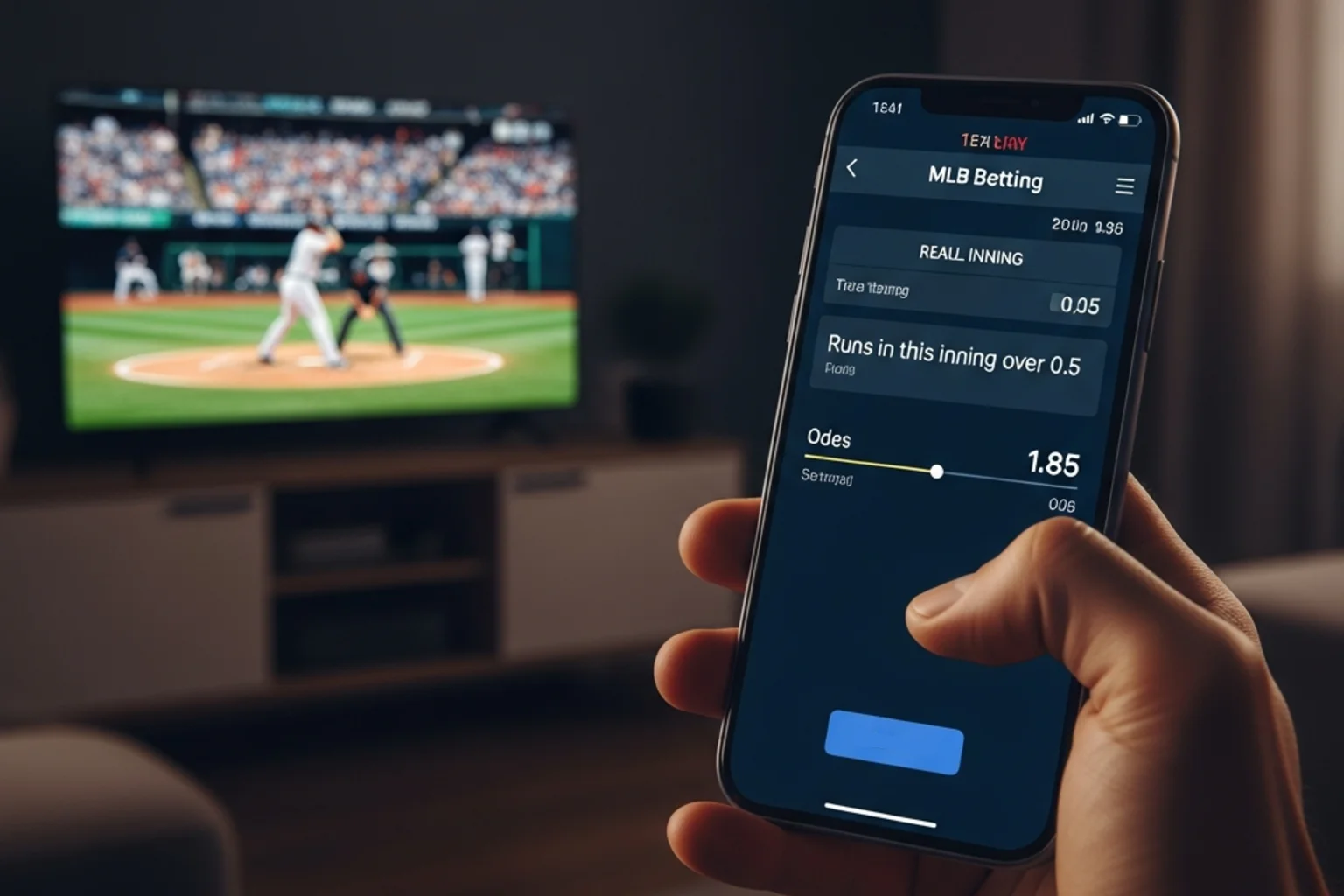
Table of Contents
- Why MLB at 4 a.m. UK time is the strangest live-betting environment in sport
- Inning-by-inning markets and where the value lives
- Live totals and run-line behaviour as the game progresses
- Latency, stream sync, and the gap between TV and bookmaker
- The UK night routine that actually survives
- Cash-out mechanics and what the maths actually says
- Frequently asked questions on live MLB betting from the UK
Why MLB at 4 a.m. UK time is the strangest live-betting environment in sport
I bet my first live MLB market at 03:47 GMT on a Wednesday in May, watching a freezing rain delay in Cleveland turn into a comeback by the bottom of the seventh. The line I took was an over on innings 7-9 total runs at decimal 1.95, and it cashed because tired bullpens scored five runs between them in 90 minutes. That night I learnt two things: live MLB betting is the most analytical in-play environment any UK operator offers, and the time difference is both a curse and a gift.
Live MLB betting — also called in-play — is the suite of markets that opens after first pitch and stays open, with prices re-quoting between every pitch, every batter, every change of innings. The core live markets are moneyline, run line, totals, individual innings runs, next-team-to-score, and a rotating menu of live player props. Some UK operators add speciality bets like “result of next at-bat” and “team to score in this inning,” which are essentially micro-markets refreshed in 30-second windows.
The structural reason in-play MLB exists differently from in-play football: baseball has natural breaks. Every pitch is a discrete event. Every half-inning has a clear stop. Bookmakers can re-price between any of these events without the chaos of an in-play football market where the ball is in play continuously. The pace produces a market that updates dozens of times per inning, and that gives the careful punter many entry points.
The UK timing problem is real. The majority of MLB regular-season games start between 23:00 and 02:30 GMT during summer, with east-coast 19:05 ET first pitches landing at 00:05 GMT. Live betting overlaps with hours when most UK adults are asleep. Around 290 million online real-events bets are placed monthly across the UK market in 2025; a tiny but devoted slice of that volume is overnight MLB action from punters who have built sustainable routines around the time difference.
Inning-by-inning markets and where the value lives
Single-inning markets are the cleanest live MLB bet, and they get more attention from sharp UK punters than any other in-play category. The line on “runs in this inning” usually sits between 0.5 and 1.5 depending on the matchup, with the over priced anywhere from 1.80 to 2.40.
The pricing model is mechanical. Take the league-average runs per inning — about 0.51 across 2025 — and adjust for the specific situation. Top of the order coming up? Add 8 to 15 percent. Top of the order against a tired bullpen? Add 25 to 40 percent. Bottom of the order against a fresh ace? Subtract 20 to 30 percent. The line at “over 0.5 runs in the bottom of the eighth” with the top of the lineup batting against a struggling reliever can be genuinely good value at 1.70 if the matchup screams.
Individual inning bets reset your bankroll exposure each frame, which is a feature, not a bug. You’re betting one inning at a time, with the outcome resolved in 15 to 20 minutes. The variance per bet is meaningful, but the lifetime variance across a season is smaller than full-game live moneylines because each bet resolves quickly and discretely.
The trap with single-inning markets is overconfidence in matchup reading. A “top of the lineup vs tired reliever” setup looks like a guaranteed over, but reality is that even tired relievers can throw a clean 1-2-3 inning. The base probability of a scoreless inning in MLB is around 70 percent — flip that for the over and you’re looking at 30 percent default probability of at least one run. Adjustments around that base, even substantial ones, rarely push beyond 50 percent. A 1.70 over priced at 58.8 percent implied is asking you to find the kind of edge that exists only in extreme cases.
Live totals and run-line behaviour as the game progresses
Live totals and live run lines update on every scoring event. A pre-game total of 8.5 will move to 9.5 if the first inning produces 3 runs, then back to 8 by the fifth if the next three innings score only 1. The line is tracking the game’s run-scoring pace and projecting forward.
The interesting analytical question is whether the live line is following the actual rate too literally. A 3-run first inning at Coors Field is unremarkable — the line should not move dramatically because the venue is high-scoring by default. A 3-run first inning at Petco against two starters who are both pitching well is more meaningful, and the live total should move with conviction.
Live run lines work similarly. A pre-game home favourite at -1.5 (2.10) might shift to -1.5 (1.65) if they take a 3-0 lead by the third inning. The new price reflects how much closer they are to covering the spread. The reverse is also true — a home favourite trailing 0-2 in the fourth might see their -1.5 price stretch to 4.50 or longer.
The pricing gap between live totals and pre-game totals is where line-shopping inside one operator works. If your pre-game over at 8.5 was a calculated value bet and the game opens 1-0 after three innings, the live over might shift to 7.5 — but the under at 7.5 may now be the better value, depending on bullpen state and remaining matchups. Holding both sides of the same game across different price points is a hedging move, not arbitrage, and it works only when you’ve done the analytical work pre-game.
Latency, stream sync, and the gap between TV and bookmaker
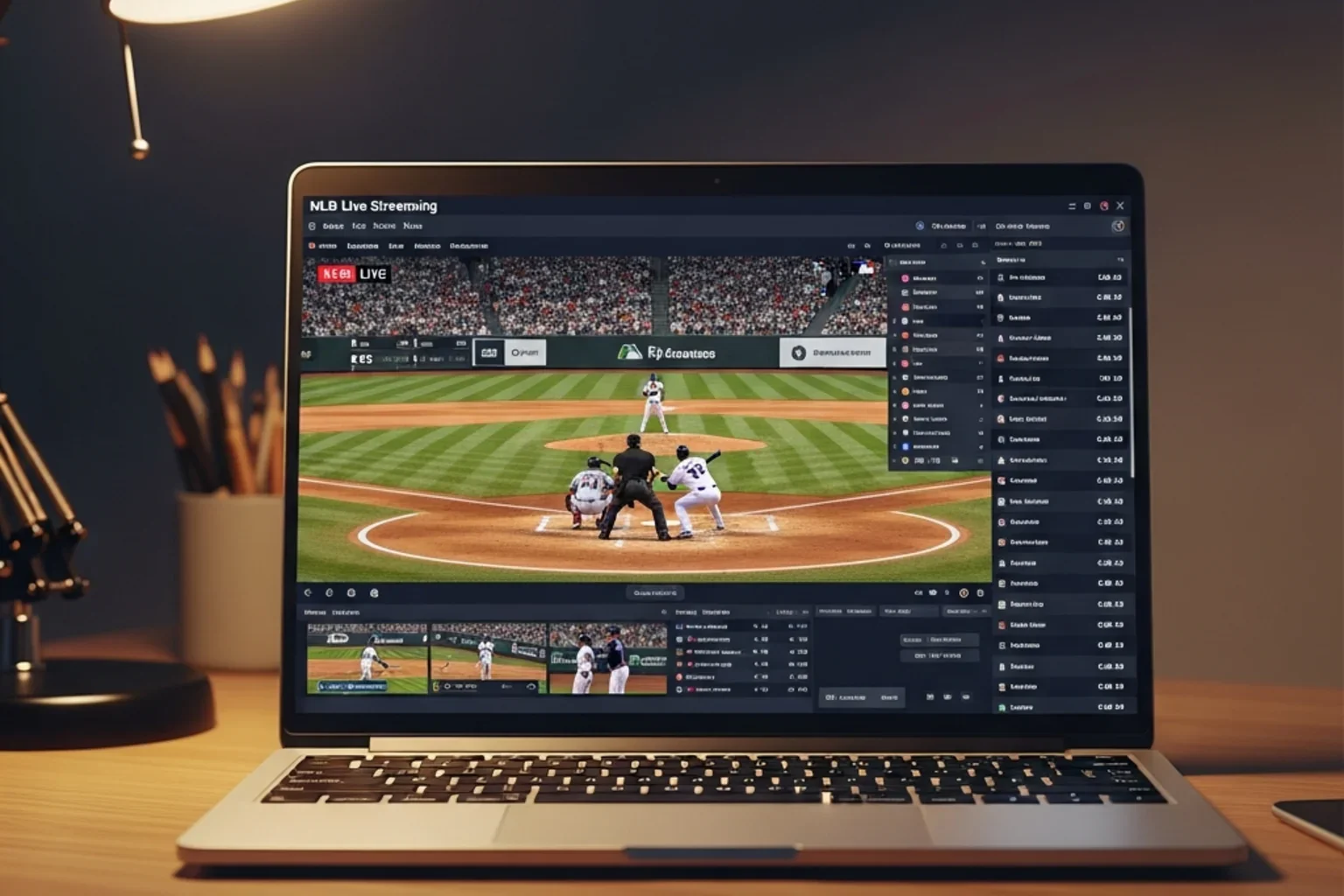
Live betting only works if you can see the game. Most UK-licensed operators offer free MLB streams to funded account holders, but the latency varies wildly. Stream delay between bookmaker feeds and the actual MLB.TV broadcast typically runs 8 to 30 seconds — and that 30-second gap is enough to make in-play betting risky if you’re watching a different stream than the bookmaker.
The MLB.TV product itself has a delay of 60 to 90 seconds versus the actual game. Sports book streams compress that gap by using the league’s official feed earlier in its broadcast pipeline. But the operator’s stream is paced to ensure the betting market closes a few seconds before a scoring event happens — bookmakers don’t want punters betting on outcomes they’ve already seen.
What this means for the practical UK bettor: the only consistent way to live-bet MLB is to watch on the bookmaker’s stream, accept the latency as part of the deal, and never try to outpace the market with a faster stream. Trying to hit a price before the bookmaker’s feed catches up is technically possible but operationally hostile — books cancel suspicious bets routinely, and arbing on stream delay is a fast route to a frozen account.
MLB.TV reported a 27 percent year-over-year viewership rise in 2025, with 7.5 billion minutes consumed by early June. The growth is mostly in international markets, including the UK. For a deeper look at which UK bookmakers stream MLB live and how their delays compare to MLB.TV, the UK bookmaker MLB streaming breakdown covers operator-by-operator details.
One detail to internalise. Tim Miller at the UK Gambling Commission said in early 2026 that the regulator wants “to start looking at what the potential path forward would be to create a way for crypto assets to be used as a consumer payment option for licensed and regulated gambling here in Great Britain.” Whatever the outcome of that consultation, the regulatory direction matters for live betting because faster deposit options shift how recreational punters react during overnight games. The slower the deposit, the more thoughtful the betting.
The UK night routine that actually survives
Live MLB betting from the UK at 3 a.m. is sustainable only if you structure it. The punters who burn out fastest are the ones who try to follow every game from first pitch to walk-off. The ones who build sustainable returns pick one or two games per night, set their stake limits in advance, and walk away after a defined endpoint.
The structural decision is choosing whether to bet pre-game and sleep, or stay awake and live-bet. Both work, and neither is automatically better. Pre-game betting captures opening-line value and lets you sleep, but you give up the in-play angles where the actual analytical edge often lives. Live betting captures in-play value but costs you sleep and concentration. The hybrid approach — pre-game positioning plus one or two scheduled live entry points based on game state — is what most experienced UK punters settle into.
The night routine I’ve used for years: pick one game with a 23:30 to 00:30 GMT first pitch, place pre-game positions before bed, wake briefly at 02:00 GMT to check the game’s state, decide on a live position if conditions warrant, then sleep. Final settlement happens by 04:30 most nights. The discipline is critical because operating on three hours of broken sleep is the fastest path to bad decisions, and bad MLB decisions compound across a 162-game season.
Cash-out mechanics and what the maths actually says
Cash-out on live MLB bets is offered by virtually every UK-licensed operator. The button is there to provide an exit from a live bet at a price the bookmaker calculates based on the current live line.
The maths is unforgiving. The cash-out price is invariably below mathematical fair value. If your pre-game over at 8.5 (price 1.95) is winning live with the game tied 5-5 after seven innings, the fair-value cash-out should reflect roughly the implied probability of the over still landing — say 78 percent, which translates to a fair value of about 1.28 of your potential return. The actual cash-out button might offer 1.18 of your stake, baking in a 10 to 12 percent margin on top of fair value.
Cash-out is useful for two scenarios. The first is genuine hedging when conditions have changed dramatically — your pre-game read is wrong, and exiting at a partial loss is better than riding out a probable full loss. The second is during high-volatility late innings where the price is moving fast and locking in a profit gives you bankroll certainty. For anything else, holding the bet to settlement is statistically better. The 600,000-plus GAMSTOP registrations as of July 2025 underline how often impulse cash-out is part of the broader gambling-harm picture; the button exists, but it should be used deliberately.
Frequently asked questions on live MLB betting from the UK
Why are live MLB markets suspended between pitches?
UK-licensed operators suspend live markets briefly between pitches and at every change of innings to allow their trading desks to update prices on the most recent game state. The suspension lasts a few seconds and protects both the book and bettors from stale-price exploitation.
Can I cash out a live MLB bet at any UK sportsbook?
Most major UK-licensed operators offer cash-out on live MLB bets, though availability varies by market type. Some niche markets — alternate run lines, specific player props — do not always come with cash-out enabled. The cash-out price always carries an additional margin over mathematical fair value.
Does live betting work over a typical UK home broadband?
Yes. Live MLB betting at UK-licensed operators requires only basic broadband stability — the bookmaker’s stream and price feed run smoothly on connections above 10 Mbps. Latency between the operator’s stream and MLB.TV typically sits in the 8 to 30 second range.
Written by the editors at mlb Online Betting.