What Happens to Your Bet If an MLB Pitcher Is Scratched
 Available in US
Table of Contents
- Why MLB Bet Rules Hinge on the Man on the Mound
- The “Listed Pitchers” Toggle Versus the “Action” Toggle
- Moneyline Treatment When a Starter Is Pulled
- How the Run Line Behaves When a Pitcher Is Scratched
- Totals Markets and the Pitcher-Swap Twist
- Props on a Pitcher Who Never Threw a Pitch
- Frequently asked questions about pitcher-scratch bet rules
Why MLB Bet Rules Hinge on the Man on the Mound
The first time I had a bet voided because a starting pitcher tweaked an oblique in pre-game throwing, I learned more about MLB rules in five minutes than I had in the previous five months. I had backed the underdog on the moneyline at 11:42 pm UK time, fell asleep, and woke up to a settled stake. No win, no loss — just my money back, untouched.
That experience is the reason this article exists, because the pitcher-scratch rule is the single most baseball-specific quirk in the entire UK betting catalogue. In football you do not get your stake refunded if the starting striker is a late withdrawal; the match still goes ahead and so does your bet. MLB is different. The outcome of your bet changes depending on whether you ticked the “listed pitchers” box or the “action” box when you placed it — and most casual UK punters do not even realise the toggle exists.
MLB plays 2,430 regular-season fixtures across the 162-game schedule, and a meaningful proportion of those see at least one starter switched between line release and first pitch — illness, blister, bullpen rotation shifted by a postponement. If you bet MLB seriously across a UK overnight, you will run into a scratched starter several times a season, and the difference between settling for action and settling on listed pitchers becomes real money over time. The published average game time of two hours thirty-eight minutes in the 2025 season also matters — short games mean short windows to adjust lineups, and managers do change their minds late.
The “Listed Pitchers” Toggle Versus the “Action” Toggle
I once watched a friend lose £80 because he assumed his bet would void automatically when the headline starter pulled out. It did not. He had taken the default option, which on most UK bookmakers is “action” — meaning the bet stands whoever throws the first pitch. The void he was banking on never arrived.
“Listed pitchers” means the wager is conditional on both starting pitchers — the two names printed when the line was released — actually taking the mound. If either is scratched, the bet is void and the stake refunded. “Action” means the bet stands regardless of the pitching change. The replacement throws, the line is re-priced internally if needed, and your stake remains live.
The reason this binary even exists is that pitcher identity moves the moneyline more than any other single factor in baseball. Pull the ace, slot in a long reliever, and the implied probability shifts by ten to fifteen percentage points overnight. A favourite at 1.62 with their Cy Young candidate on the mound becomes a coin flip with a swingman replacing him. Bookmakers will not let you keep the original price into a fundamentally different match, so they offer you a choice up front: lock in the names or accept whatever turns up.
The default setting is what catches most UK punters out. On most major UKGC operators, the standard MLB pre-game ticket is “action” unless you explicitly switch. Other operators flip it to “listed pitchers” by default. There is no UKGC mandate on which way that toggle points — it is a commercial choice — and you have to check on every slip. I now treat the toggle the same way I treat the stake amount: a conscious confirmation before I tap Place Bet.
Moneyline Treatment When a Starter Is Pulled
Three Aprils ago, I had a moneyline on a 1.85 underdog. Their opponent’s ace was scratched ninety minutes before first pitch with what was described later as “general soreness.” The bookmaker had me on action, the replacement was a rookie making his second career start, and my dog won 6-1. I would have happily taken that result every day of the week — and I would have missed it entirely if I had picked listed pitchers.
On a moneyline market, the void rules are blunt and clean. If the bet was placed under listed pitchers and either named starter does not throw the first official pitch of the game, the wager is void and the full stake is returned. There is no proration, no partial settlement, no held funds. The money is back in your account, usually within a couple of hours of confirmation.
Under action, the moneyline stays live regardless of who actually starts. Whatever you priced when you backed the favourite at 1.55 remains the settlement basis even if a Triple-A call-up takes the ball. Some UK books reprice the market between the scratch announcement and first pitch and offer you a courtesy cash-out at the new implied probability; most do not, especially in the late overnight hours when UK operations are running thin.
What I have learned the hard way is that the scratching news arrives in a hierarchy. The team Twitter feeds break it first, the bookmaker pricing updates second, and the casual punter notices third — usually after the bet has already settled. If you want to play moneyline action without surprises, build the habit of checking the official MLB starting pitcher confirmation around two hours before first pitch. That window is when 80% of late scratches surface, and it is also the last clean point to pull or hedge before the bet locks in.
One detail worth flagging because it confuses people: the rule trigger is the first official pitch, not the announced starter. A pitcher can warm up, walk to the mound, and still be replaced before throwing — that still triggers a listed-pitchers void. The opposite is also true: a single pitch counts. UK operators follow the same convention as their US-licensed parents on this; I have not seen a deviation in eleven seasons.
How the Run Line Behaves When a Pitcher Is Scratched
The run line is where the rules get more interesting. The standard MLB strikeout props market behaves one way; the run line behaves another, and the difference is rooted in what the spread is actually measuring.
The run line is a fixed -1.5 / +1.5 spread on the score, priced at variable odds because the spread itself is hardcoded. A favourite must win by two or more runs; the dog can lose by one or win outright. Pitcher identity affects this market dramatically — an ace throwing six shutout innings makes the -1.5 cover much more likely; a back-of-rotation starter giving up four early makes it almost a coin flip.
Most UK books treat the run line the same as the moneyline for void purposes: listed pitchers means scratch equals void, action means the bet runs. The catch is that some operators carve out an exception. If only the away starter is scratched, both sides void. If only the home starter is scratched, both sides void. If both are scratched, definitely both sides void. The asymmetry comes when you combine the run line with action and the pricing has not been refreshed — you end up holding a -1.5 ticket on a much weaker rotation than the original price assumed.
My personal rule on the run line is to insist on listed pitchers, full stop. The market is already volatile enough — replacement starters change the expected run distribution so much that holding action exposure on a spread bet is essentially betting blind. I will accept action on a moneyline because the result is binary; on a run line, the margin matters and a replacement pitcher can shift the expected margin by half a run or more.
Totals Markets and the Pitcher-Swap Twist
I bet a great deal of totals — overs and unders on combined runs — and the pitcher rules here are the most counter-intuitive of the lot. A pitcher scratch can move a total by a full run, and the action-versus-listed decision becomes a forecast on rotation depth rather than a forecast on the game itself.
The default UK book treatment on totals is that listed pitchers triggers a void if either starter is scratched. Action keeps the bet live. The reason both teams matter is that the total is a sum of both offences against both pitching staffs, and changing one starter affects half the equation in a way the bookmaker cannot ignore. Some operators offer a “pitchers must throw” toggle that is functionally identical to listed pitchers; others fold it into the same general action default.
What makes totals different in practice is the direction of the bias. When a starter is scratched and replaced by a long reliever or bullpen day, the expected run total almost always rises — because the replacement has worse strikeout-to-walk ratios, fewer innings stamina, and a higher pitch count per out. If you held an over on action, a scratch is generally good news. If you held an under, you are praying the replacement somehow grinds out five workable innings.
I once held an under 8.5 at decimal 2.10 with both listed starters having sub-3.50 ERAs. One of them was scratched at 22:30 UK time with a forearm strain. The replacement was a swingman with a season ERA of 6.42. The total ended up at 12 runs combined. Had I taken listed pitchers, my bet would have voided and my stake refunded. I had taken action because I assumed the matchup was bulletproof; the replacement crater taught me to default to listed on any under priced shorter than 2.00.
Props on a Pitcher Who Never Threw a Pitch
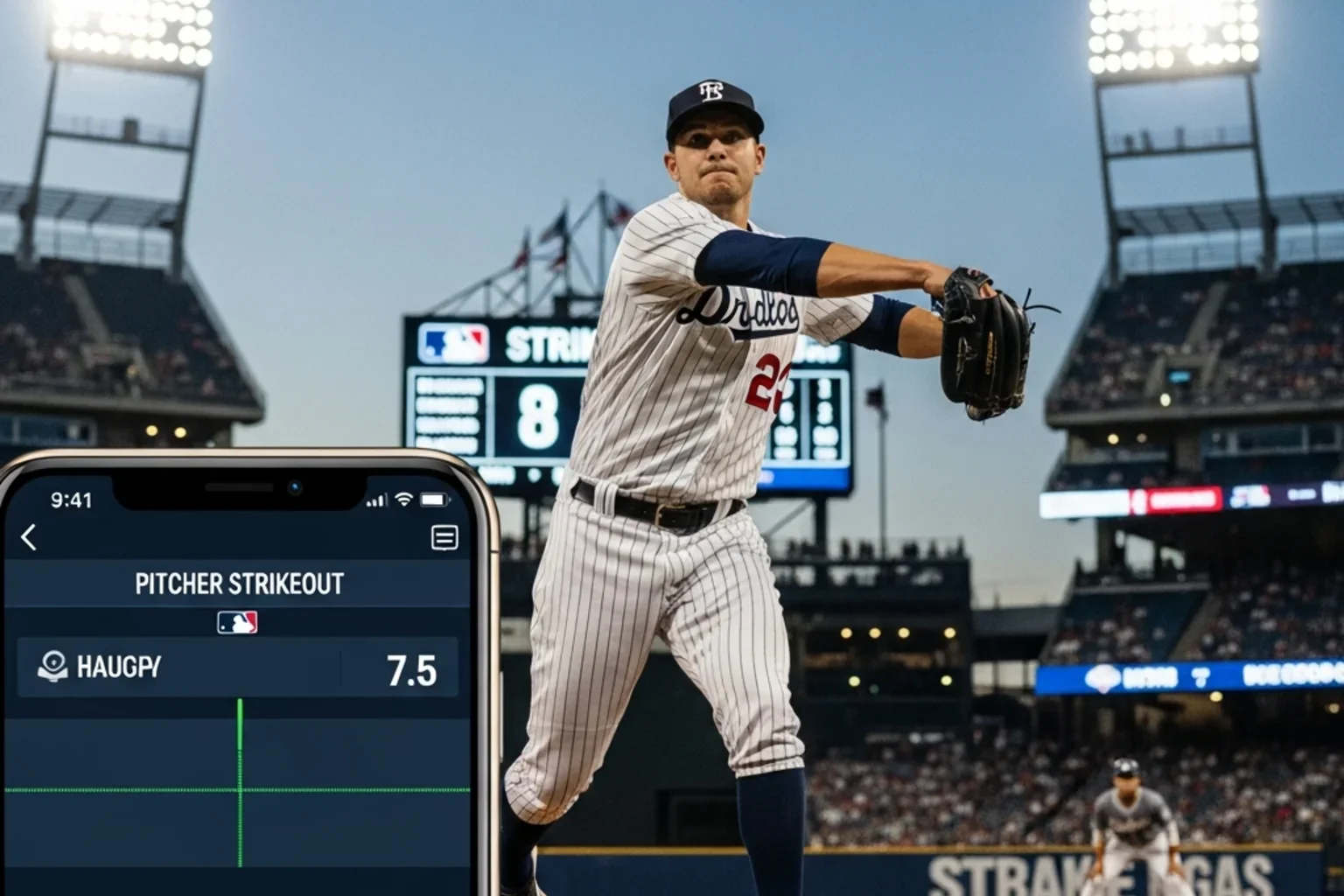
Props are the cleanest category, ironically, because the rules are almost intuitive. If you bet on a specific pitcher to record over 6.5 strikeouts and that pitcher is scratched, the bet voids automatically regardless of the listed-pitchers toggle. The toggle does not apply to player-specific markets — the player has to play for the market to settle, and if he does not, the stake is refunded.
The same logic extends to outs recorded, earned runs allowed, walks issued, and pitching-side win props. All of them require the named pitcher to actually pitch. If he is scratched, voided. If he pitches even briefly — one batter, one out — the prop settles on whatever he actually produced, even if it is comically below the line. Recording two strikeouts in a quarter-inning appearance settles the over 6.5 strikeouts ticket as a clear loss.
There is a related quirk on prop multiples that catches people out. If you built a bet builder that combined a strikeout prop with the moneyline and run line on the same fixture, a scratched starter voids the strikeout leg, but the moneyline and run line legs depend on their own toggles. The bet builder reduces to a smaller multiple at the adjusted price, which can still be a perfectly good ticket — but it is no longer the bet you placed, and on some UK platforms the difference is presented as if the original bet “lost a leg” rather than being voided. The functional outcome is the same; the user-interface framing is misleading.
I treat pitcher props as the most pitcher-dependent bet on the entire MLB slate, which is obvious in hindsight. The signal from a scratched starter is sharper here than anywhere else, because you can lose a small but real edge if a scratch is announced after you placed the prop and before the bookmaker froze the market.
Frequently asked questions about pitcher-scratch bet rules
What is the ‘action’ option on an MLB moneyline?
Action means the bet stands regardless of which pitcher throws the first pitch. If the listed starter is scratched and replaced, your stake stays live at the original odds. Listed pitchers means the opposite — a scratch voids the bet and refunds the stake. Most UK bookmakers default to action; check the slip before you confirm.
If both listed starters are scratched, do all MLB bets void?
Under listed pitchers the answer is yes — both sides being scratched triggers a void on moneyline, run line and totals. Under action the bet stays live whoever the replacement pitchers turn out to be. Player-specific props on the scratched pitchers void regardless of the toggle, because the named player did not appear.
Do live MLB bets need the listed pitcher rule?
No. Once the first official pitch is thrown, the game is underway and live-betting markets settle on what actually happens in real time. The listed-pitchers rule only governs pre-match bets placed before the game starts. Any in-play wager you place after first pitch is automatically tied to whoever is throwing at that moment.
Written by the editors at mlb Online Betting.