Betting MLB World Series Futures from the UK
 Available in US
Table of Contents
- Why the World Series Is a Twelve-Month UK Outright Market
- When the Market Actually Opens and Refreshes
- What the Typical Price Bands Look Like
- Live Outright Pricing During the Postseason
- How I Approach Hedging Outright Tickets
- UK Bookmaker Coverage and Where It Differs
- Frequently asked questions on World Series outright betting
Why the World Series Is a Twelve-Month UK Outright Market
The 2025 World Series went seven games, and Game 3 ran eighteen innings — a record book wrecker. I was holding a hedged ticket on the Blue Jays, and I watched that single game shred more of my mental peace than the entire preceding three weeks of postseason combined. That kind of variance is exactly why I love outright futures: you pay once, you wait, and one moment of madness either crowns you or refunds the lesson.
The World Series outright is an old-school market in the most modern environment. It opens at most UK bookmakers in early November, the day after the previous champion lifts the trophy, and stays live for thirteen months until the next final pitch is thrown. That length of window is what makes it different from anything in the football outright catalogue — even Premier League winner closes in nine months. A World Series outright at a UK-licensed bookmaker is an investment instrument that happens to settle on a sport.
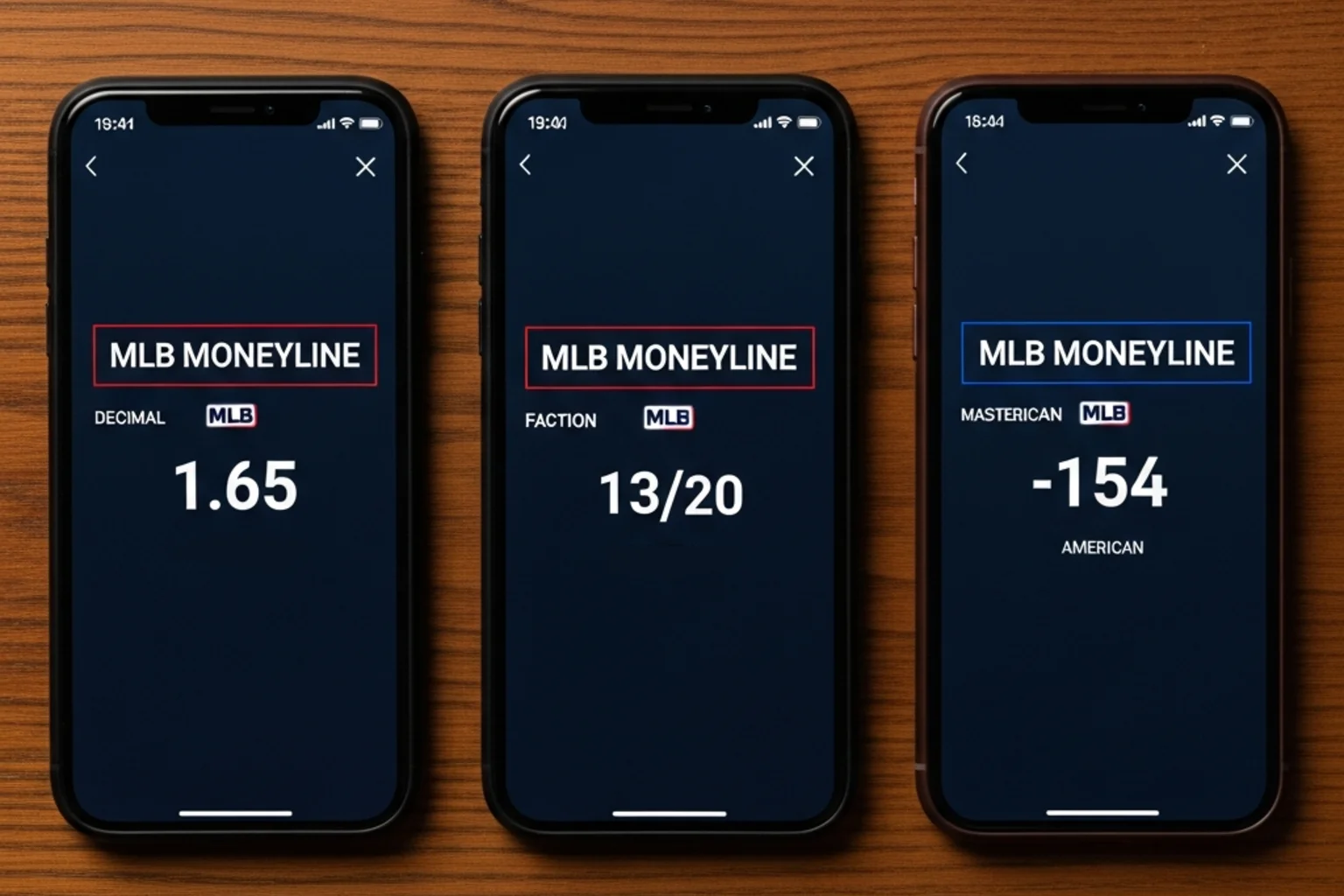
UK punters can access this market through any UKGC-licensed operator that covers MLB, which means most of the major books. The pricing is American-derived but displayed in decimal odds for the British audience, with the favourite typically opening between 5.0 and 8.0 and the long shots running out to triple-digit decimal prices. There is more dead capital in a UK MLB outright slip than almost anywhere else, which is why this article focuses as much on when to bet as on what to bet.
When the Market Actually Opens and Refreshes
I have a running calendar reminder set for the first Tuesday of November every year. That is the day, give or take 48 hours, that UK bookmakers refresh the World Series outright for the new season. The reminder exists because the first 72 hours after market open are the single most exploitable window of the year.
Here is the rhythm: the World Series ends, the off-season begins, and the books need new outright markets to keep MLB visible on their sportsbook navigation. They price the new season aggressively because almost nothing is known yet — free agency has not started, trades have not happened, and last year’s playoff teams are usually overpriced because that is the most recent data point in the modelling. Within a week, the smart money has hit the soft spots and the lines tighten dramatically.
The refresh cadence after that is irregular. Major moves happen at four predictable points: the winter meetings in December, the start of spring training in mid-February, the trade deadline at the end of July, and the postseason bracket clarification in late September. Between those punctuation marks the line drifts gently with injury news, but the structural pricing barely changes.
UK books update at slightly different speeds. The flagship operators refresh nightly during the off-season and intra-day during the regular season; the smaller books sometimes lag by 24 to 48 hours, which occasionally creates a stale-price arb that disappears once they catch up. I have grabbed pricing of 18.0 on a team that was already 14.0 elsewhere; the gap closes within hours, but if you are watching multiple books, it is real money.
One quirk that always trips up first-time futures bettors: a postseason elimination does not void your outright. It settles it. If you backed a team at 22.0 in November and they lose the National League Division Series in October, your bet has lost the moment that elimination is confirmed — no refund, no chance of resurrection. Outrights settle on the trophy lift, not on participation.
What the Typical Price Bands Look Like
The 2025 opening number that gets quoted most is the Blue Jays at 66/1 — roughly decimal 67.0 — when the season began. They went on to make the World Series. Meanwhile the Dodgers opened as the +240 favourite, which converts to about 3.40 decimal. The Dodgers lost the final to those same 66/1 Blue Jays. Outright pricing tells you what the market thinks, not what is going to happen.
UK bookmakers structure the World Series outright market into rough price bands that broadly repeat year on year. The top of the board is occupied by three or four favourites priced between 5.0 and 9.0 — usually the deep-pocketed contenders coming off strong seasons. Below them sits a middle tier of eight to ten teams between 11.0 and 26.0 — the playoff hopefuls with real but constrained ceilings. Beneath that, you have another ten clubs sitting between 31.0 and 81.0, and at the bottom of the board, the rebuilds and tankers priced anywhere from 101.0 out to 501.0 or longer.
The shape of that distribution is what makes the World Series outright interesting. Compare it to a Premier League winner market, where four teams typically share over 90% of the implied probability. In MLB, the top four favourites might cover 45% of the market between them, with the rest spread across 26 other clubs. That is a function of the playoff structure — twelve teams qualify, two best-of-five rounds get folded in, and randomness amplifies through six elimination series. A football title is won over 38 games; a baseball title is won across three weeks of variance-heavy postseason.
What that distribution means practically is that long shots in MLB are genuinely investable in a way they rarely are in football. A 51.0 outright on a team you think is borderline-playoff with one good pitching trade is not a Hail Mary — it is a positive-expected-value bet if you happen to be right about that trade. The 2019 Washington Nationals were 31.0 in spring training and won the trophy. The 2023 Arizona Diamondbacks were 101.0. These things happen because the variance ceiling of the format is genuinely uncapped.
The bookmaker margin on outright markets sits between 130% and 145% total book — meaning the implied probabilities across all thirty teams add up to that much. That is wider than the moneyline juice on individual games and reflects the long-tail risk the book carries on the rebuilds. There is value to be found, but only if you know what the fair price band should be for each tier.
Live Outright Pricing During the Postseason
I held a Blue Jays ticket at 67.0 going into the 2025 postseason. By the time they reached Game 7, the live outright on them had compressed to 1.95. That ticket was worth more in expected value at 1.95 than I had paid for it at 67.0 — but only on paper, because the next nine innings either tripled it or burned it. That is the mathematics of postseason futures.
Live outright markets are different beasts to pre-season outrights. They are live-betting products in the sense that the price updates between innings, but they are settled like outrights — only the trophy lift triggers payout. UK books quote them as decimal odds in the standard markets section, alongside the moneyline for that specific game; you have to look for the “to win World Series” header to find them.
The pricing dynamics during the postseason are sharp. A team’s outright price compresses each round they survive: leaving the Wild Card cuts the price roughly in half, the Division Series knocks another 40-50%, the League Championship Series cuts again, and reaching the World Series itself usually puts the price somewhere between 1.7 and 2.7 depending on opponent. By Game 7 of a tied series, you are essentially looking at a coin flip dressed up as an outright market.
The Game 7 example from 2025 is instructive: 68% of wagers and 70% of money at BetMGM were on the Blue Jays heading into the final game — and the Blue Jays were holding the long-shot side of the bracket. The volume migration tells you how live outright markets move. People who never held a futures position pile in late, treating the outright as effectively the moneyline on a single game. That can create soft spots if you bought in early at 67.0 and the price is now sitting at 2.1 with the public on the wrong side.
One thing I should explain about the live outright that is not obvious: it is not the same as cashing out your original ticket. Cash-out is the bookmaker offering to buy back your stake at the current implied value, minus their margin. The live outright is the market price for a new bet. They diverge sometimes — cashing out an old ticket can underprice you compared to placing a fresh outright on the same team at the current live price, especially deep into a tight series.
How I Approach Hedging Outright Tickets
I almost never hedge before the World Series itself. The principle is simple: if I priced the team well in November, the equity I built up by them surviving each round is mostly fragile equity, and hedging too early gives most of it back to the bookmaker through their margin on the hedge bet.
The hedge that does work is the late-stage moneyline lock-in. Say you backed a team at 51.0 in February. They survive the regular season, the Wild Card, the Division Series, and the Championship Series. They are now in the World Series itself, priced at 2.25 to win it. The opponent is at 1.78. A simple moneyline hedge on the opponent across the seven-game series — or on game-by-game lines — converts most of your floating equity into guaranteed return.
The maths is unkind to the lazy hedger. If you backed a team at 51.0 with a £20 stake, your potential return at win is £1,020. If you hedge by staking £400 on the opponent at 2.25, you guarantee yourself £900 if either side wins — locking in £500 profit but giving up the upside of £620 more. That trade-off is what you are paying for, and whether it is worth it depends entirely on how willing you are to ride 50-50 variance for one final week.
I will sometimes hedge with a series correct score instead of a flat moneyline — taking 4-3 in either direction at much longer odds — which preserves more of my original outright value while still capping the downside. The postseason betting framework for series correct scores covers that mechanic in detail; it is a more precise instrument than moneyline hedging when you want partial exposure rather than full lock-in.
UK Bookmaker Coverage and Where It Differs
Coverage of MLB futures at UK-licensed bookmakers is broader than most casual punters realise, but it is not uniform. Some books price all thirty teams from November onwards; others limit the board to the top fifteen or twenty until spring training, then expand. The smaller operators often skip MLB outrights entirely during the off-season and only resurface them in March.
What varies more than the breadth is the depth of associated markets. The premium books — the ones with serious US market exposure — typically price not just the World Series winner but the AL Pennant, NL Pennant, MVP, Cy Young, Rookie of the Year, division winners, and over/under regular-season win totals for each team. The mid-tier operators give you the World Series outright and the two pennants, then taper off. The smallest UK books often only offer the headline outright and nothing else.
The reason that matters for futures betting strategy is the hedging toolset. If you backed a team to win the World Series and the book also offers their pennant outright, you can construct partial hedges by laying the pennant once your team reaches the League Championship Series, locking in a guaranteed minor return while still holding upside on the trophy. Without the pennant market, your only hedging instrument is the opponent’s moneyline, which is a blunter tool.
UK books also differ on dead-heat rules in outright markets. If two teams are tied for a division and the league applies a tie-breaker game, some books settle the division outright on the tie-breaker result; others void and refund. The same applies if a World Series is somehow shortened or cancelled — no recent precedent, but the small-print rules vary materially between operators. Read the specific terms before committing a serious stake.
Frequently asked questions on World Series outright betting
When do UK bookmakers refresh next-season World Series futures?
The new market opens within 24 to 48 hours of the previous World Series ending — usually the first week of November. Major operators refresh prices nightly through the off-season, with significant repricing at the winter meetings in December, the start of spring training in mid-February, and the trade deadline at the end of July.
Does a swept World Series void any futures markets?
No. A sweep settles the outright as normal — the winning team’s backers are paid, the losing team’s tickets settle as losses. The only thing that changes with a sweep is the series correct-score market, which settles on 4-0 rather than longer scores. Outright tickets and pennant outrights are unaffected by the margin of victory.
Prepared by the mlb Online Betting editorial staff.