MLB Bet Builder and Same-Game Combos in the UK
 Available in US
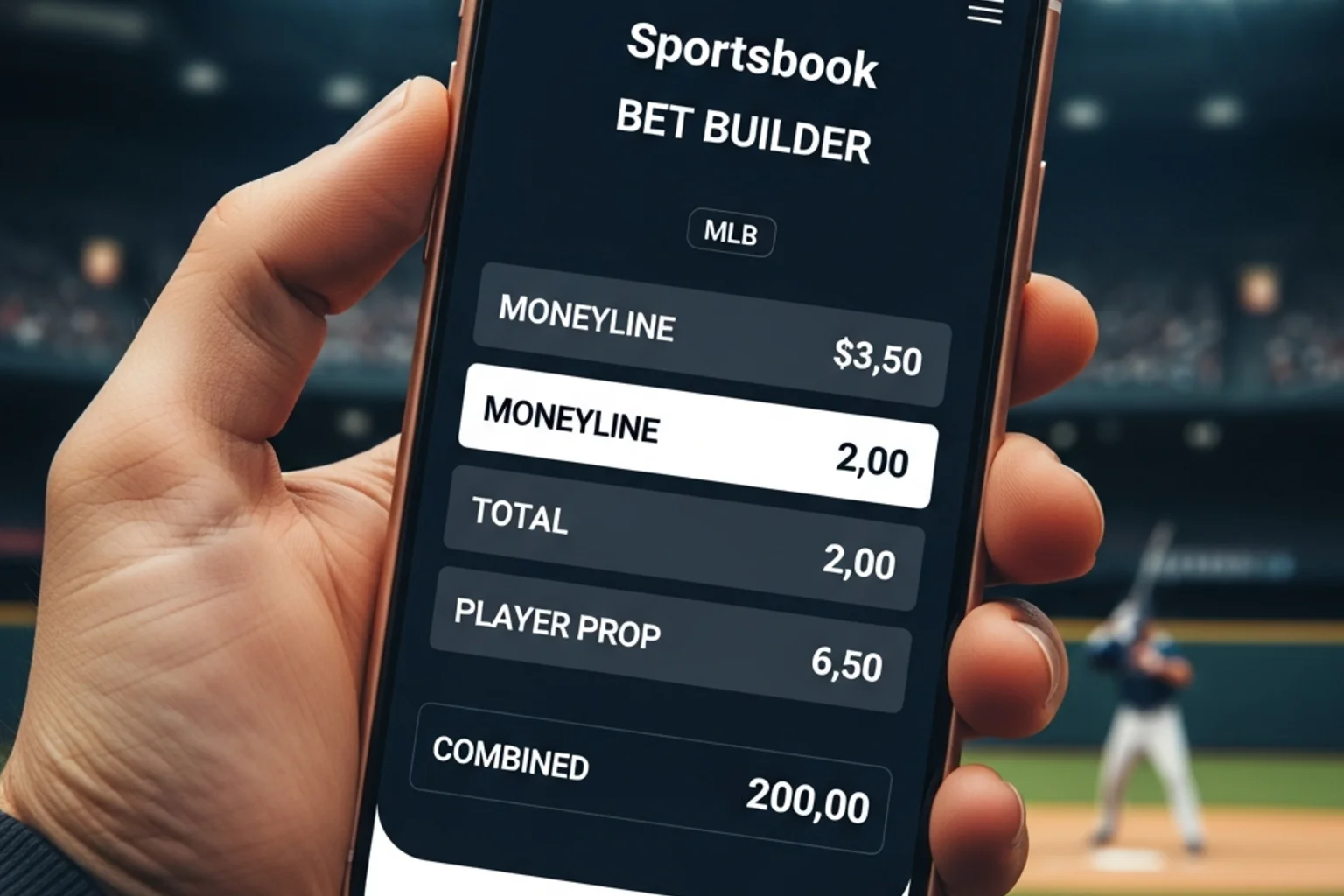
Table of Contents
- The market that rewrote how UK punters approach a single game
- Same-game parlay versus traditional parlay: the maths that matters
- The legs that actually work together in MLB
- The correlated-legs trap and how books actually price it
- UK bookmaker Bet Builder coverage on MLB
- Frequently asked questions on MLB bet builders
The market that rewrote how UK punters approach a single game
I remember when Bet Builder didn’t exist for MLB at UK books. You wanted to combine a moneyline, a run line, and a strikeout prop on the same game? You couldn’t. Each book had hard rules against same-game parlays, citing correlation risks. By 2022 every major UK-licensed operator had rolled out a Bet Builder for baseball, and the volume on single-game combos has done nothing but grow. The market is fundamentally different from a traditional parlay, and not understanding that difference is how most casual punters slowly leak bankroll.
An MLB Bet Builder — also called a same-game parlay (SGP) or same-game multi at some UK operators — is a custom combination of two or more betting legs from the same game, priced as a single ticket with a recalculated combined odds figure. The legs can include any combination of moneyline, run line, totals, player props, alternate run lines, alternate totals, innings markets, and method-of-victory bets. The defining feature is that the legs are from one game.
The defining feature of the price is also the defining feature of the market: the bookmaker accounts for correlation between the legs and discounts the combined price accordingly. A traditional parlay of three independent events from three different games multiplies the odds directly. A Bet Builder of three correlated legs from one game shows a combined price meaningfully shorter than that multiplication would suggest.
This is the structural difference UK punters need to internalise. The price you see on a Bet Builder ticket is not a free arithmetic combination of the individual leg prices. It is a probability-weighted recalculation that reflects how often those specific outcomes co-occur in real games. Once you accept that, the question shifts from “what is the multiplied price?” to “is the bookmaker’s correlation discount fair?”
Same-game parlay versus traditional parlay: the maths that matters
The cleanest way to see the difference is to take the same three legs and price them two ways.
Legs: home team to win moneyline at 1.80, over 8.5 runs at 1.90, named starter over 5.5 strikeouts at 1.85. Traditional parlay multiplication: 1.80 × 1.90 × 1.85 = 6.32 combined decimal odds. £20 stake returns £126.40 if all three land. Clean, but only true if the three events are statistically independent — which, when they come from the same game, they aren’t.
Bet Builder price for the same three legs on most UK operators: somewhere between 4.50 and 5.50. The book has discounted the combined price by 12 to 30 percent. Why? Because the three events are positively correlated. A home team winning is more likely when the total goes over (more runs scored generally helps the team scoring most). A starter recording over 5.5 strikeouts is more likely when his team wins (good pitching is one of the conditions for winning). The events are linked in a way that traditional parlay maths ignores.
The discount is sometimes fair and sometimes generous to the bookmaker. The key question is how much of the correlation is real. Statistically tight correlations — same-team-wins-and-scores-multiple-runs combinations — get heavy discounts and are usually fair. Loose correlations — same-game over and one player to record a hit — get smaller discounts and sometimes leave value on the table for punters who calculate carefully.
The opposite trap is the negative-correlation combination. A home team to win + under 7.5 runs is a negatively correlated combination — the home team winning typically requires runs, and an under suggests few runs. The book will charge a margin to allow you this ticket, but the maths is hostile because the events partially exclude each other.
The legs that actually work together in MLB
Years of building these tickets have taught me which leg combinations make analytical sense and which ones are dressed-up coin flips. Three patterns hold up.
The first is the heavy-favourite-plus-runs ticket. Home team moneyline at 1.55 combined with over 8.5 runs at 1.95. This is two positively correlated legs that both rely on offensive production. If the bookmaker prices the combined at 2.40 or so, you’re betting on a high-scoring win, which is a coherent thesis tied to specific conditions: hitter-friendly park, weak opposing starter, warm evening. The discount from raw multiplication (1.55 × 1.95 = 3.02) is significant but defensible.
The second is the ace-pitcher-plus-strikeouts ticket. Starter’s team to win + over on the starter’s strikeout prop. These are positively correlated for an obvious reason: good pitching produces both wins and strikeouts. A dominant starter going 7 innings with 9 Ks usually also has the win column going his way.
The third is the slugger-and-team-totals ticket. Named player to hit a home run + the team’s individual total to go over. A home run is a meaningful chunk of the team’s scoring; the two outcomes pull in the same direction. The traditional player-prop multiplication is generous on these combinations; the Bet Builder discount is usually substantial. For a deeper look at how home-run props are priced individually before being combined, the MLB home run prop pricing breakdown walks through the underlying probability work.
Combinations to avoid: anything that pits negatively correlated legs against each other unless the prices are extremely generous. Specifically, betting an under total + the favourite to win comfortably + a named hitter to record a home run is logically incoherent — those three outcomes rarely all happen in the same game.
The correlated-legs trap and how books actually price it
The correlation between legs is the entire reason Bet Builder is profitable for bookmakers. Some operators run live trading models that re-price the combined ticket on every leg you add. Others use static correlation tables — pre-computed coefficients for common leg pairings — that produce approximate prices fast but miss situational nuance.
The trick to exploiting this is finding combinations where the book’s correlation discount underestimates the true correlation. The clearest case is what I call the “thesis stack” — three legs that all share the same underlying assumption. A home team in a hitter’s park with a strong lineup + over total + home team to win run line + their leadoff hitter to record over 1.5 hits. Four legs, all riding on the same offensive day from the home team. The book’s correlation discount on a four-leg ticket like this is sometimes 35 to 40 percent off raw multiplication, which sounds harsh but doesn’t reflect just how tightly these four outcomes are linked. If the underlying thesis is right, all four cash; if it’s wrong, none of them do. The actual outcome distribution is bimodal, and the book’s discount partly fails to capture that.
The opposite trap is the “spread risk” Bet Builder: combining one home-team leg with one away-team leg from the same game. Bookmakers price these as anti-correlation negatives, but the punter is essentially exposed twice on the same game volatility without much underlying coherence. These tickets rarely produce edge.
One quiet detail worth flagging. The UK Gambling Commission tightened operator obligations through 2025 on transparency around complex bets, but Bet Builder pricing is not subject to fair-vig disclosure rules. The hold rate on Bet Builder tickets is meaningfully higher than on individual markets — often 12 to 18 percent overall margin versus 4 to 6 percent on a flat moneyline. Punters pay for the convenience of combining legs in one click.
UK bookmaker Bet Builder coverage on MLB
Not every UK-licensed operator covers MLB Bet Builder to the same depth. The major books — bet365, William Hill, Betfair, 888sport — offer comprehensive Bet Builder on every MLB game, with the full menu of leg types available from first pitch. Mid-sized UK operators, including Spreadex and BoyleSports, run Bet Builder on most games but with a narrower leg menu, typically restricting prop legs to the most-bet hitters and starting pitchers.
The breadth of available legs matters more than the headline odds. A book that offers 20 prop markets per game gives you exponentially more Bet Builder combinations than a book that offers 6. The trade-off is that broader leg menus often come with slightly tighter individual prices — the operator is compensating across the menu.
One technical note specific to MLB Bet Builders: leg conflicts are automatically resolved by most UK operators, but the rules vary. If you try to combine “home team over team total of 4.5” with “home team to score under 4 runs,” the system will usually flag the conflict before letting you add the ticket. Less obvious conflicts — combining a starter’s strikeout over with a same-pitcher early hook prop — sometimes go through and result in unsettled bets that need manual resolution. This is rare but worth knowing about.
Cash-out availability on partially-completed Bet Builders is offered by most UK-licensed books, but the cash-out value is invariably worse than the mathematically fair price would suggest. Cash-out is a convenience, not a profit-optimisation tool. The 600,000-plus GAMSTOP registrations as of mid-2025 hint at how much volume operators see on impulse-driven cash-out behaviour, and the pricing reflects that. Treat the cash-out button as an exit door, not a strategy.
Frequently asked questions on MLB bet builders
Why is the bet-builder price often shorter than the parlay multiplied price?
Because the legs come from the same game and are statistically correlated. Bookmakers recalculate the combined price using correlation coefficients between the leg types, producing a number shorter than raw multiplication would give. Positive correlations between legs lead to bigger discounts.
Are MLB bet builders cashed out partially if one leg loses?
No. A standard Bet Builder is settled as a single bet — every leg must land for the ticket to win. Cash-out before settlement is offered by most UK-licensed operators on partially-completed tickets, but cash-out value is worse than fair, and a fully losing leg ends the ticket entirely.
Created by the ”mlb Online Betting” editorial team.