How Weather Moves MLB Betting Lines
 Available in US
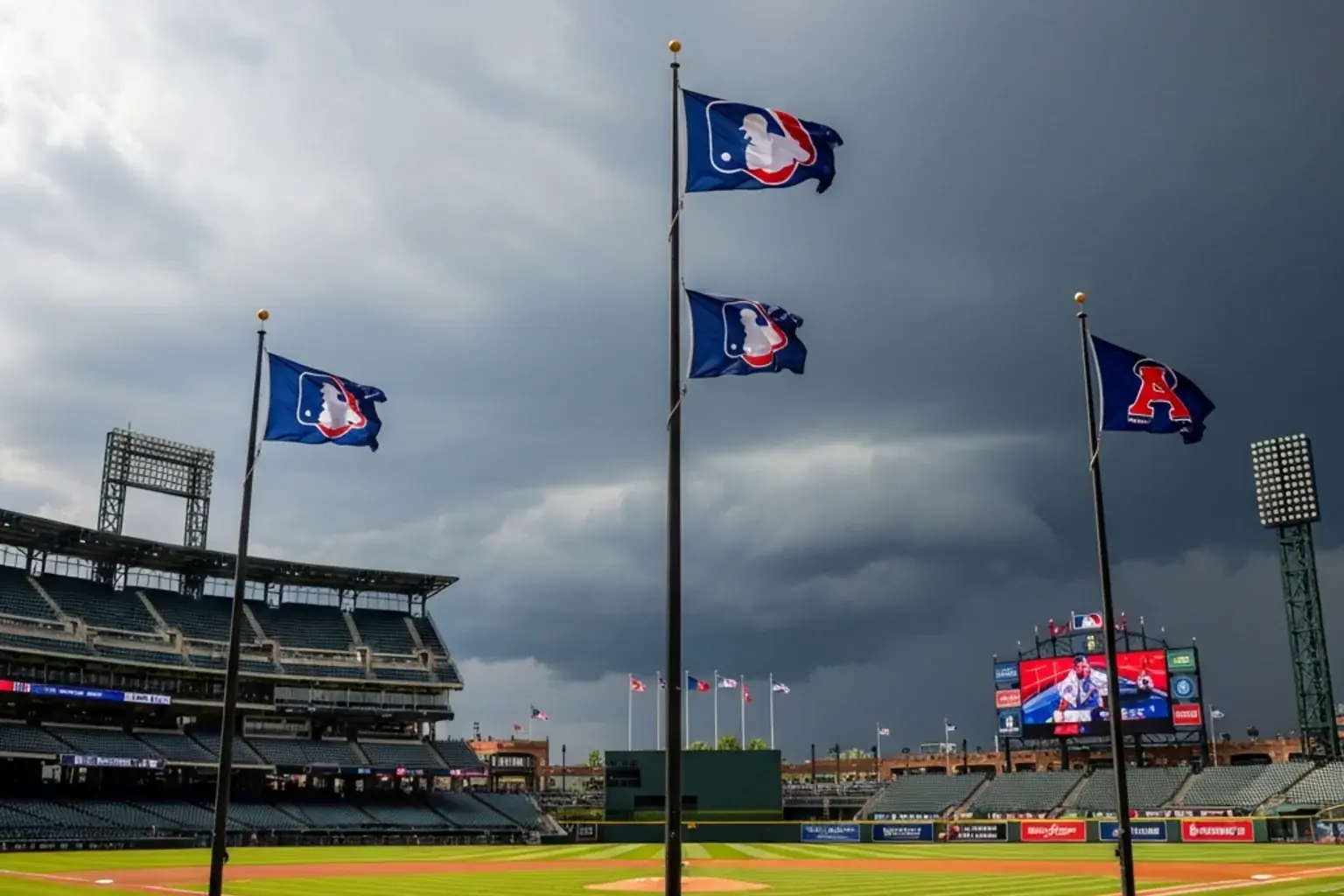
Table of Contents
- Why Weather Matters in Baseball Like in No Other Sport
- Wind Direction and Why It Eats Fly Balls
- Temperature and the Carry of the Ball
- Humidity and Air Density
- Rain and the Risk of a Suspended Game
- Domes and Retractable Roofs
- How the Line Actually Reacts to Weather News
- Frequently asked questions on weather and MLB betting
Why Weather Matters in Baseball Like in No Other Sport
I have bet on football, cricket, tennis, and basketball, and in not one of those sports does weather move the total by 1-2 runs the way wind speed at an open MLB ballpark can. Baseball is uniquely sensitive to the air around it. The ball travels through unobstructed open space for hundreds of feet on every well-struck fly ball, and the conditions of that air — temperature, humidity, wind speed, wind direction — affect every single one of those flights in measurable ways. Bookmakers know this. The savvy UK punter who tracks the conditions in the hours before first pitch can sometimes spot a total that has not yet been adjusted to match what the weather is going to do.
I once watched a Wrigley Field total drift from 8.5 to 10 across four hours on the afternoon of a game, purely because the wind direction shifted from blowing in off Lake Michigan to blowing straight out toward the outfield. The two pitching staffs had not changed. The lineups had not changed. The probable home runs to be hit that night had simply tripled because of where the wind was pointing. That is not a quirk; it is a structural feature of MLB, and it is the reason this article exists.
Bill Miller, President and CEO of the American Gaming Association, observed that the industry’s recent record performance “reinforces a clear principle” about the value of legal, regulated sports betting. The principle that matters for UK MLB punters specifically is that the markets are deep and the pricing inputs are publicly available — including weather data, which any motivated bettor can access. The asymmetry is not in the information; it is in who notices and acts on the information in time.
Wind Direction and Why It Eats Fly Balls
The first thing I check when I am looking at an MLB total is the wind direction at the relevant ballpark. Wind blowing out toward centre field pushes fly balls farther and turns warning-track outs into home runs; wind blowing in from centre field crushes fly balls and turns potential home runs into routine fly-outs. The effect is statistical and consistent across decades of baseball data.
The numbers behind the effect are large enough to matter. A 10-mph wind blowing straight out at Wrigley Field adds approximately 25 feet to the carry of a fly ball hit on a typical launch angle. That is the difference between a warning-track out at 380 feet and a home run that clears the 396-foot wall in centre. Multiply that across a game’s worth of fly balls and you can produce 2-3 additional home runs in a single fixture from wind alone.
Wind blowing in is symmetric. A 10-mph wind blowing in from centre takes that same 25 feet off the carry. Fly balls that would have been home runs become routine catches; the offence struggles to produce runs through the air; and the total compresses toward 7 or lower from what would otherwise be a 9-run game. The bookmaker pricing engines try to capture this in real time, but the model is operating on weather forecasts that update every six hours while the live conditions update continuously.
The asymmetry that punters can exploit is in the timing of the line adjustment. Bookmakers update totals when the weather forecast updates, but the bettable line at the moment of bet placement sometimes reflects a stale forecast. If you are checking the local airport conditions at the ballpark 90 minutes before first pitch and the wind is gusting harder than the forecast predicted, you have information the bookmaker has not yet processed.
Wind crossing the field — from left field to right field or vice versa — has a more nuanced effect. It does not change the carry distance directly, but it changes the spray pattern of where fly balls actually land. Hitters who pull the ball naturally get a boost or a penalty depending on which way the crosswind blows. The net total effect is smaller than headwind/tailwind but the per-hitter prop effect can be larger.
Temperature and the Carry of the Ball
Cold air is denser than warm air. A baseball travels measurably less far in cold conditions than in warm ones because the denser air provides more resistance. The effect is around 1-2 feet of carry per 5°C of temperature change, which sounds small until you stack it across an entire night of fly balls.
The seasonal swing matters most. A April game at 7°C in Boston produces measurably less home run output than the same matchup in July at 25°C, even if the wind conditions are identical. Bookmakers price this seasonal effect into the totals, but the day-to-day temperature swings can produce within-month variance that the pricing engine does not always catch up with.
The specific number that influences my totals decisions is the game-time temperature compared to the team’s seasonal average at that ballpark. If the temperature is 5°C below the seasonal mean, the total should be priced slightly under what the pure projection suggests. If it is 5°C above the mean, slightly over. The effect is small per game but adds up across enough fixtures to produce real expected value over a season.
One related effect is that pitchers also feel cold weather. Sustained cold conditions affect grip strength, breaking-ball movement, and pitcher endurance. Cold-weather games sometimes produce fewer total runs not because the carry is reduced but because the pitching is genuinely sharper — and the bookmaker totals can over-adjust in the opposite direction, opening unders that are too short.
Humidity and Air Density
Humidity has a smaller but real effect on baseball flight. Humid air is actually less dense than dry air (water molecules are lighter than nitrogen and oxygen molecules), which means humid conditions produce slightly longer carry distances. The effect is modest — perhaps 2-3 feet on a typical home run — but it is a tailwind in the direction of higher scoring.
The interaction between temperature and humidity is what produces the maximum carry conditions. A warm, humid evening in mid-summer at a sea-level ballpark produces the longest fly ball distances of the season. Cold, dry conditions produce the shortest. UK punters who model totals carefully build this interaction into their projections; the bookmaker pricing engines do too, but the bettable line at the moment of placement does not always reflect the most current humidity data.
Rain and the Risk of a Suspended Game
Rain affects baseball totals in a way that is fundamentally different from wind or temperature. Rain does not change the physics of the ball in flight; it changes the probability of the game being completed at all. A rain-delayed game gets restarted from where it stopped; a rain-shortened game can be called complete after five innings; a rain-postponed game gets rescheduled entirely and any pre-match bet voids under listed-pitchers rules.
The probability of rain disruption in any given fixture is built into the bookmaker pricing for both moneyline and totals. A game with 60% rain probability at first pitch will see all markets priced more conservatively, with the total compressed (because a five-inning game has lower expected total runs) and the run line moved (because a five-inning game produces a tighter margin distribution).
What that means for UK punters is that rain-affected fixtures should be approached with extra caution on the pre-match markets. If you want exposure to such a game, the live in-running markets after the first pitch is thrown are often the better instrument — they price the actual conditions in real time and the bookmaker margin can be marginally lower than the pre-match listed-pitchers protected line.
The general totals framework covers how the over/under market works mechanically; on rain-affected fixtures, the additional layer is the partial-game settlement rules that vary slightly between operators. Some books settle five-inning games as completed for totals; others void totals on shortened games. The differences matter and should be checked before committing a significant stake.
Domes and Retractable Roofs
Five MLB ballparks have either fixed domes or retractable roofs that can be closed against weather. Tropicana Field, Minute Maid Park, Globe Life Field, T-Mobile Park (rarely closed), and American Family Field have configurations that can neutralise weather entirely or partially. A closed retractable roof essentially turns the game into an indoor fixture with controlled temperature and zero wind.
The pricing of indoor games is materially different from open-air games. Totals are typically more stable because the weather variability has been removed. Player props are more reliable because the pitcher-versus-hitter matchup is the dominant factor without environmental noise. UK punters who prefer reduced variance often find indoor games the most consistent betting environment in the league.
What is less obvious is that retractable roofs do not always close even when the forecast suggests they should. Teams sometimes leave the roof open in marginal conditions, and the bookmaker pricing has to account for that decision. The roof status is usually announced 30-90 minutes before first pitch; UK punters checking pre-match conditions need to verify the actual roof state at the relevant ballpark rather than rely on default assumptions.
How the Line Actually Reacts to Weather News
The bookmaker pricing engines build weather adjustments into the opening line, but the adjustments are based on forecasts that may be 24-48 hours stale. The live re-pricing happens in tighter cycles — typically every 1-3 hours as updated forecasts arrive — and the final 90 minutes before first pitch is when most of the meaningful weather adjustments hit the line.
The pattern I have observed across hundreds of fixtures is that totals move by roughly half a run when wind direction changes meaningfully from the opening forecast, by 1-2 runs when extreme wind conditions develop (20+ mph gusts blowing out or in), and by smaller increments when temperature shifts a few degrees from forecast. Moneylines move less than totals because the wind affects both offences roughly symmetrically.
The totals market response curve to weather news is therefore steeper than the moneyline response. UK punters who track weather closely and place totals positions in the final pre-match window often capture more of the bookmaker’s reactive repricing than those who place at the opening line.
Frequently asked questions on weather and MLB betting
How many hours before first pitch do bookmakers price-in weather?
The opening totals incorporate weather forecasts at the time of release, typically 18-36 hours pre-match. Live re-pricing happens every 1-3 hours as updated forecasts arrive, with the final adjustment usually within 90 minutes of first pitch when current conditions and ballpark-specific wind reports are available. Extreme weather news can move the total by half a run within minutes of being confirmed.
Does a closed retractable roof neutralise weather completely?
Yes — a fully closed roof removes wind, neutralises temperature variation, and eliminates rain risk entirely. The game becomes an indoor fixture with controlled conditions. Teams typically confirm roof status 30-90 minutes before first pitch; UK punters should verify the actual state at the relevant ballpark rather than assume the default, because the same venue can be open one night and closed the next.
Written by the editors at mlb Online Betting.