UKGC Affordability Checks: What MLB Bettors Should Expect
 Available in US
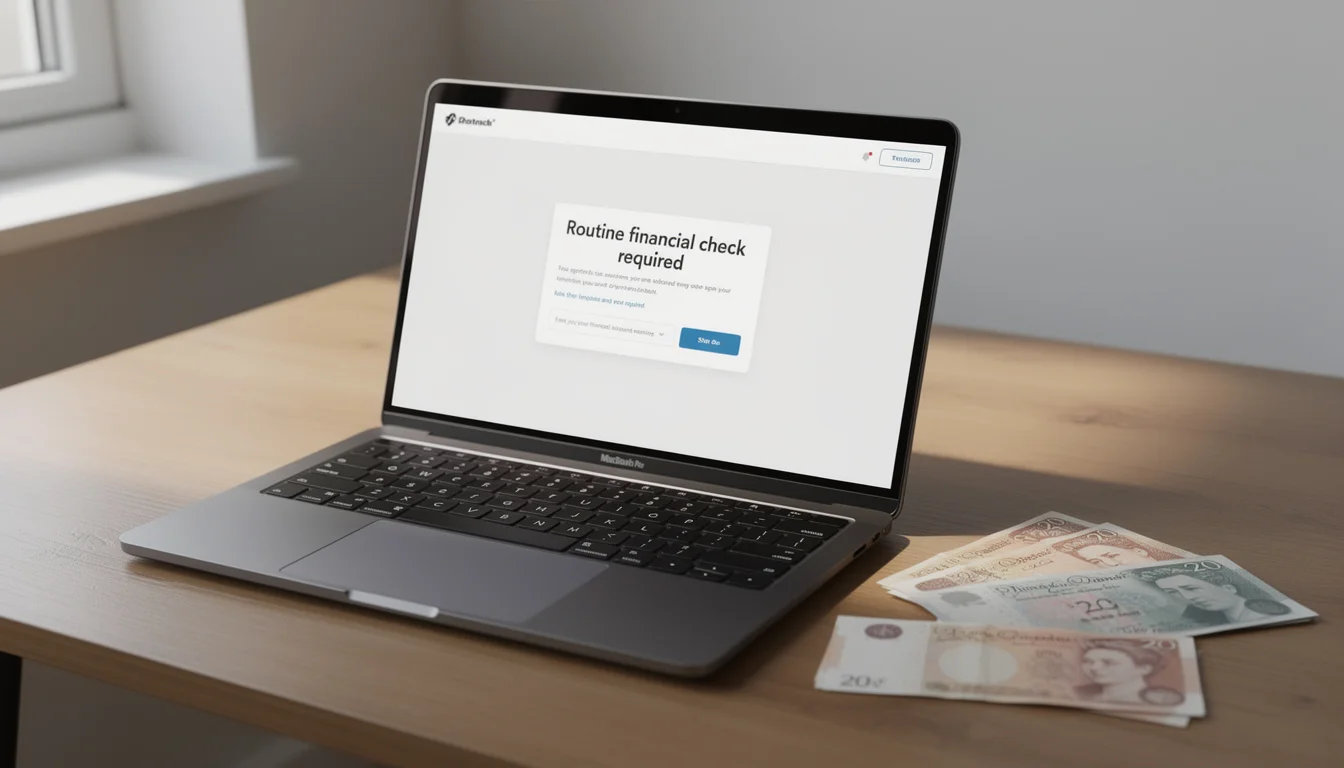
Table of Contents
The £150 Threshold That Triggers Your First Check
Since 28 February 2025, all UKGC-licensed remote operators have been required to conduct financial vulnerability checks on customers whose net deposits exceed £150 within a rolling 30-day period. That number is the trigger. It is not a guideline or a soft target — it is the regulatory threshold at which the operator is obliged to verify that the customer’s gambling activity is consistent with their financial circumstances. The threshold was reduced from £500 (set in August 2024) specifically to capture more customers earlier and prevent the harm that escalates when checks happen too late.
For MLB punters specifically, the £150 figure is easier to hit than most people realise. The 162-game schedule produces roughly five fixtures per night across most of the calendar. A £30 stake across five games is £150 — half a week’s worth of light evening betting. A more active punter placing two or three bets per fixture can hit the threshold in two nights. The MLB season is long enough that the rolling 30-day window resets continuously, but it also produces enough betting opportunities that the threshold is rarely hard to cross.
What surprises punters who are not aware of the rule is that the check happens automatically. There is no opt-in or opt-out — the operator’s compliance system flags the account when the £150 threshold is crossed, and a review process is initiated. The punter typically learns about the check when they receive a request for documentation, sometimes during an active betting session, and the account may be temporarily restricted until the documentation is processed.
How the Thresholds Actually Work
The £150 threshold is calculated as net deposits — meaning total deposits minus total withdrawals — across a rolling 30-day window. A customer who deposits £200 in a month but has also withdrawn £100 has a net deposit of £100, below the threshold. A customer who deposits £200 with no withdrawals has crossed the threshold and triggered the check.
The 30-day window is rolling rather than monthly. Each day, the system recalculates the previous 30 days of net deposit activity. A customer who triggered the check three weeks ago is approaching the rolling window’s expiration; once the older deposits drop out of the 30-day window, the net figure may fall back below £150.
The £150 trigger is the first stage of a two-tier system. The second stage triggers at £1,000 of net deposits within the rolling 30-day window, at which point a more detailed financial review is initiated — typically including bank statement verification, employment confirmation, and a more comprehensive affordability assessment. The two-stage system is designed to allow casual punters to engage normally while ensuring more intensive scrutiny applies to higher-volume customers.
The 13.5 million active monthly online accounts in the UK regulated market mean that the affordability check infrastructure is processing an enormous number of customers continuously. The system is largely automated for the £150 threshold and increasingly automated for the £1,000 threshold, with manual intervention only when documentation is unclear or inconsistent.
What Data Operators Actually Look At
The first-stage £150 check is what the UKGC describes as “frictionless” — meaning it should not require active customer engagement in most cases. The operator’s automated system checks publicly available data (credit reference agencies, basic identity verification) and assesses whether the customer’s profile is consistent with the deposit pattern. Most customers crossing the £150 threshold pass this automatic check without ever realising it happened.
The checks become friction-inducing when the automated assessment is inconclusive. A customer with limited credit history, recent address changes, or other anomalies in the available data may be flagged for additional verification. The operator typically requests proof of address, proof of identity, and sometimes a recent payslip or bank statement.
The £1,000 second-stage check is more comprehensive. Operators may request actual bank statement copies covering several months, employment verification, and in some cases a self-declaration of monthly disposable income. The intention is to verify that the customer’s gambling spending is a small fraction of their disposable income rather than a significant share of their available funds.
What operators are not allowed to do is share specific affordability data between operators. Each operator runs its own check independently. A customer who has cleared a £1,000 check at one operator and switches to another will face an independent check at the second operator. The data is operator-specific, not industry-wide, which is part of why aggregated UK gambling participation is hard to monitor from the regulator’s perspective.
What Triggers Deeper Checks Beyond the Threshold
Beyond the basic deposit-volume thresholds, several other patterns can trigger enhanced affordability checks. Rapid increases in deposit velocity — going from light occasional deposits to heavy daily deposits within a short window — is the most common trigger after the volume threshold itself. The system is designed to detect chasing behaviour.
Late-night betting patterns are flagged in some operator systems. A customer who deposits and bets primarily between 1 am and 5 am UK time is exhibiting behaviour that correlates statistically with problem gambling, and some operators apply lower affordability thresholds to those accounts. The MLB schedule’s structural pressure toward overnight UK betting is a specific concern for compliance systems — punters whose MLB session naturally falls in the late-night window may face checks earlier than their absolute deposit volume would suggest.
Loss-chasing patterns are the third major trigger. A customer who deposits, loses, then deposits again within a short period — particularly multiple times in a single day — is exhibiting a behavioural marker that operators are required to track. The chase pattern triggers checks regardless of the absolute deposit amounts, because the marker is behavioural rather than financial.
Source-of-funds inconsistencies are the fourth trigger. A customer whose deposit pattern is inconsistent with their declared income or whose deposit sources change frequently (different bank cards, different e-wallets) may be flagged for review. The intention is anti-money-laundering rather than affordability per se, but the checks are run together.
MLB-Specific Deposit Spike Patterns
The MLB season creates specific deposit patterns that compliance systems can identify. The Opening Day spike — a sudden surge of deposits at the start of April — is a known seasonal pattern. The postseason spike in October produces another. Customers who deposit normally for most of the year but spike during these windows are not necessarily problem gamblers, but the system flags the pattern for review.
The other MLB-specific pattern is the late-summer drift. Casual punters who started the season strong sometimes lose engagement by July or August, then re-engage for the postseason. The re-engagement spike can trigger reviews if the deposit volume jumps materially from the recent baseline. This is a particular issue for UK punters who treat MLB as a postseason-only sport, depositing heavily in October after a quiet summer.
The interaction with the rolling 30-day window matters here. A customer who deposits £100 in each of three consecutive months has a clean trail. The same £300 deposited within a single 30-day window crosses the threshold and triggers a check. UK punters who plan their MLB betting around major events (Opening Day, All-Star break, postseason) should be aware that the concentrated timing can produce different affordability outcomes than the same total deposited evenly across a season.
Customer Rights and the Complaints Process
Customers who are subjected to affordability checks have specific rights under both UKGC rules and broader UK consumer protection law. The right to know what specific information is being requested and why; the right to a reasonable timeline for documentation submission; and the right to escalate disputes through the operator’s complaints process and ultimately to the Independent Betting Adjudication Service.
What customers do not have is a right to gamble without checks. The affordability framework is a regulatory requirement, and operators that fail to apply it face significant penalties — including fines and licence reviews. The £150 threshold is not negotiable at the customer level; it is a baseline below which operators are taking compliance risk if they do not act.
The customer obligation is to provide accurate information when documentation is requested. Providing false or misleading information during an affordability check can constitute fraud and may result in account closure, withdrawal of funds being frozen, and reporting to regulatory authorities. Customers in genuine financial distress should engage honestly with the process — operators have responsible-gambling resources that may be a better fit than continued betting at increased thresholds.
The GAMSTOP self-exclusion framework is the relevant alternative for customers who recognise that affordability checks are pointing toward a broader problem. GAMSTOP is a single-point self-exclusion that applies to all UKGC-licensed operators and removes access entirely for periods of six months to five years. The relationship between affordability checks and self-exclusion is that the checks are sometimes the trigger that surfaces a need for the latter.
The 600,000+ GAMSTOP registrations by mid-2025 — with the 525,000 active exclusions reported and an additional 100,000 added in the prior 11 months — give a sense of the scale at which UK punters reach this conclusion. The affordability check infrastructure is doing meaningful work in flagging customers earlier, before the harm escalates to the point where self-exclusion is the only remaining option.
Frequently asked questions on UKGC affordability checks
Does the £150 threshold reset every calendar month?
No — the threshold is calculated on a rolling 30-day basis, not a calendar month. Each day, the operator recalculates the previous 30 days of net deposit activity. A customer who deposited £150 on the 1st of the month is at the threshold on the 30th and just below it on the 31st as the original deposit ages out of the window. The rolling structure prevents customers from gaming a calendar-month reset.
Can I be locked out mid-World Series for an affordability review?
Operators are allowed to restrict account activity during an affordability check, which can include preventing new deposits and sometimes preventing new wagers until documentation is processed. The timing is not coordinated with sporting events — the check triggers when the threshold is crossed, regardless of whether you are mid-series or mid-fixture. UK punters expecting heavy postseason engagement should ensure their account verification is complete in advance to minimise disruption.
Prepared by the mlb Online Betting editorial staff.